
Class Mom in Colombia: The Complete Guide + Free Toolkit to Being a Madre del Salón
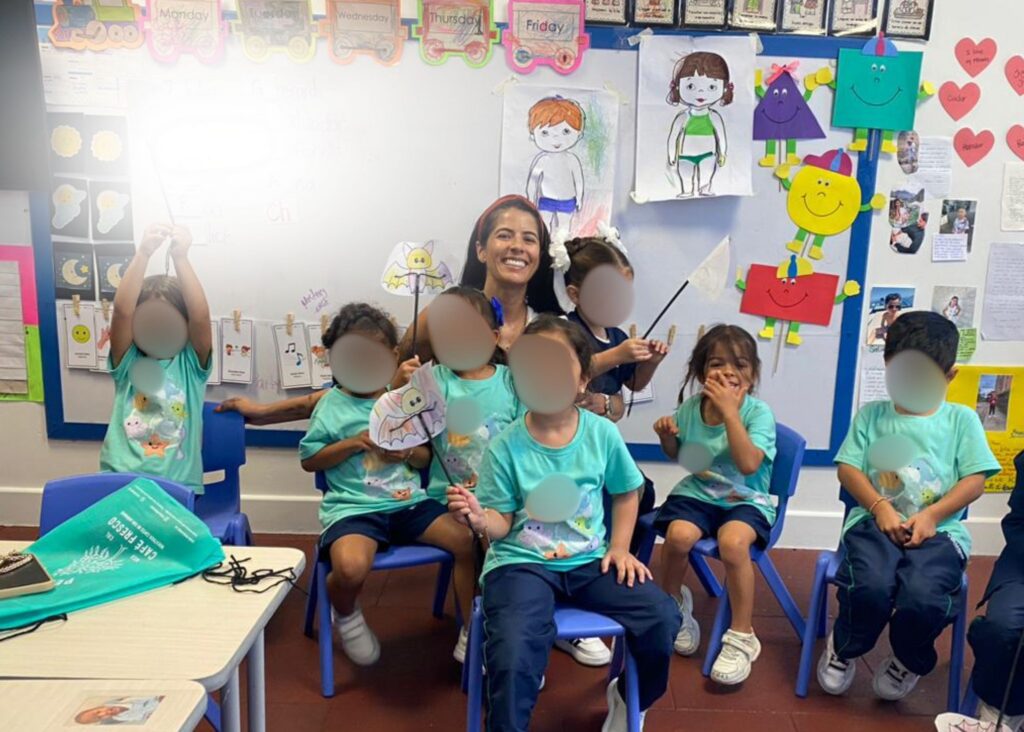
If you’ve ever gotten a WhatsApp message at 9pm asking what color shirt your kid needs by Friday, you’ve met a class mom. Maybe you are one. Maybe you’re trying to figure out if you should volunteer to be one. Either way, this is the guide I wish someone had handed me before I said yes.
I’ve been the class mom for my kids’ classes for a few years now in Medellín. This post is everything I’ve learned: what the role actually is, what it isn’t, how the budget system works, and why the WhatsApp group doesn’t have to be chaos.
What Is a Class Mom?
A salon mom, or classroom mom, is the parent who acts as the point of contact for a class. Coordinating with the teacher, managing the class WhatsApp group, collecting funds for shared expenses, and generally being the person everyone asks when they don’t know what’s going on.
Here’s the thing about the term: it isn’t standardized. At my kids’ school, it’s madre (o padre) del salón. At others, it’s vocal de curso or vocal de aula. None of these are wrong, they’re just what your specific school calls it. I use “salon mom” throughout this guide because that’s become shorthand in my own community, but don’t be surprised if your colegio uses different language entirely.
Does Every Class Have a Class Mom?
Not necessarily, and it varies more than you’d expect. In my experience, the role is most common and most formalized once kids are in colegio proper: a stable class, one lead teacher, a full school year together. At the jardín or guardería level, it’s hit or miss and depends on the size. Smaller class sizes and more direct teacher-parent contact mean there’s often less need for a go-between. Sometimes in larger groups, there can be a parent to steps up to take the lead.
If your school doesn’t have this role at all, that doesn’t mean something’s missing! It just means your community handles things differently. And if you’re not sure whether your class has one, that’s worth asking your teacher directly.
How I Became the Class Mom
I didn’t set out to do this. A few things pulled me in:
It’s a genuine way to get connected. Being class mom put me in contact with the administrators, the teachers, the other staff — not just my own kid’s world, but the whole ecosystem around it. There’s a parent association equivalent that meets occasionally (and yes, sometimes it’s exactly as chaotic as PTA meetings Stateside). I’m not a stranger to my kids’ classmates when I see them at birthday parties. That connection means a lot.
There’s a lot of last-minute in this job. And that’s not just a Colombia thing. It happens in the US too. My teachers are pretty flexible with curriculum and follow the kids’ lead, which sometimes means a message two days before an activity asking for toilet paper rolls or a bag of dry pasta. I’m a planner by nature, so being the salon mom let me add a little structure to that unpredictability. Here’s how I sort it:
- If it’s something the whole class needs, it comes out of the shared fund and I’ll usually have it delivered same-day.
- If it’s something each child needs individually, that’s on each family.
Communication can be a real pain point, and I wanted to be part of the solution. I’ve heard a lot of parents complain about school communication. It makes sense in a group chat with 20+ kids and both parents in each family, that’s 40 people with opinions and questions. I’ve heard of parents getting 200+ new messages within an hour more times than I can count. Being salon mom means being an active part of providing clarity for everyone, not just another voice adding to the noise.
What a Class Mom Actually Does
The job shifts as kids get older. In the younger grades, most of what I’m sending reminders about is logistical. What to wear, what to bring in, upcoming supply requests. As kids move up, homework reminders start to show up more too.
A few things a class mom is not responsible for: they’re not the allergy or medical authority for the class. That said, class moms often end up coordinating informally with another parent in the grade, especially around parties, just to make sure there are options everyone’s kid can actually eat.
One more thing worth naming clearly: the salon mom usually has the teacher’s direct phone number. That number doesn’t get passed along to other parents without asking first. It’s a small thing, but it matters. Teachers deserve to control who has direct access to them, and class moms are in a position to either protect that or not.
If you’re at an international school like mine, know that your class budget will likely run higher than what other schools in the city factor in. Keep that in mind if you’re comparing notes with other class moms across different schools.
WhatsApp Group Culture
The class WhatsApp group isn’t a problem to solve, it’s just a thing you learn to work with. Twenty-plus families in one thread means a wide range of communication styles, and that’s normal, not a flaw in the system.
What’s helped me:
- Start with a greeting before diving into updates. A quick “Buenas, espero que estén bien” before the actual message goes a long way here. Paisas notice and care about this, and skipping straight to business can come across as cold even when that’s not the intent
- Keep whole-class logistics in the main group, and handle one-on-one clarifications in DMs instead of hashing them out publicly
- Share updates with a light touch. a quick clear text, not a wall of messages
- When something needs a decision (contribute individually vs. one collective purchase), poll the group directly instead of assuming
How the "Fondo Escolar" Works
Money is where trust either gets built or breaks down fast. Here’s the system I use: one payment, one time, at the start of the year, covering everything from birthdays to Navidad to the year-end party. I completely understand that back-to-school season is already expensive. If a family needs to split the payment into installments, I make that option known upfront. The point isn’t rigidity. It’s avoiding the alternative: constant small transfer requests all year long, which is exhausting for everyone, myself included.
The total cost gets divided across the whole class — but naturally, some kids join mid-year, so I don’t prorate by the month. Instead, I keep it simple with two windows: if a family joins between August and December, they pay the full amount. If they join between January and June, they pay half. Whatever’s left in the fund at the end of the year goes straight back to the kids for the year-end party
Transparency matters here more than anything. Once the deposits are in, I pull all the cash out and separate anything already earmarked for a specific expense, so it’s not sitting there getting mixed up with the rest. Every time I take money out, there’s a receipt for it. Either posted in the group chat or filed in the envelope. I keep an “actual spend” column next to the planned budget for each line item, so at any point I know exactly what’s been spent versus what was budgeted.
Building Trust Takes Time
My first year, I struggled. I was chasing people for payments, messaging the group constantly about who was bringing what, second-guessing whether to just buy things myself or poll the group first. It took a while to find a rhythm.
What changed things: giving families a choice — did they want me to handle everything centrally, or did they prefer to each contribute their own piece? Every group is different, and asking outright instead of assuming saved a lot of friction. So did being visibly transparent about where the money went. Trust doesn’t come from being in charge. It comes from people being able to see what you’re doing with what they gave you.
Free Class Mom Toolkit: Templates You Can Actually Use
Everything above is easier with a system behind it. I built a free toolkit with the templates I use every year:
- Family Info Form: the one-time form parents fill out that captures allergies, sizes, birthdays, and preferred names, so you’re not chasing this info mid-year
Salon Mom Presupuesto: the budget tracker that turns “one payment, one time” into something you can actually manage
Salon Roster: the quick-reference version of the form, for when someone asks “wait, how many kids are in the class?”
The Class Mom Starter Kit (Free Templates Inside)
Everything you need to run a class fund without the chaos — a family info form, a budget tracker, and a roster, built from years of actually doing this job. Grab all three and stop rebuilding it from scratch every year.
Thank you!
You have successfully joined our subscriber list.
A Year at a Glance
- Back-to-school: send the Family Info Form, collect the fund
- Teacher and staff birthdays: flowers, cake, a small gift
- Navidad: gifts for lead teachers and support staff
- Día del Maestro: appreciation for everyone who touches the classroom
- Class parties throughout the year: coordinated with parents, options for all diets
- Year-end: whatever’s left in the fund goes toward the class party
Class Mom FAQ
What does a class mom do?
A class mom coordinates communication between the teacher and parents, manages the class WhatsApp group, and handles the shared class fund for events and supplies.
Is “class mom” the same as “madre del salón” or “vocal de curso”?
Functionally, yes. The role is the same, but the name changes by school. Ask your teacher what your school calls it.
Do salon moms exist at jardín and guardería level?
Sometimes, but less consistently than at colegio level. It depends heavily on your specific school.
Is the class mom responsible for allergy information?
No. That responsibility stays with each family, though class moms often help coordinate around it for parties.
How much does the class mom fund usually cost
It varies by school and by city — international schools tend to run higher than others. Ask your class mom or class parent group what’s typical for your school.
Glossary
Class mom: this guide’s shorthand for the parent class-representative role. Spanglish, like me.
Madre (o padre) del salón: the term used at some schools, mine included
Vocal de curso / vocal de aula: the term used at other schools
Presupuesto: the planned budget for a class expense
Fondo de salón: the shared class fund
Matrícula: a one-time registration fee some programs charge, separate from ongoing costs
Know someone about to become a class mom for the first time or curious about what it is? Send them this and if your school calls it something different, DM me so I can add it to the list.

MEET SARAH
Welcome! I’m Sarah. I started this blog to be a resource for others around a few of my favorite things: living in Colombia, DIY projects, places traveled, and day-to-day life. My hope is that it can a place of inspiration and encouragement to help you plan the next project or adventure of your own!