This post may contain affiliate links. Read my full disclosure here.
The El Cocuy trek isn’t one hike. It’s three separate trails, each with its own difficulty, altitude, and personality: Laguna Grande de la Sierra, Púlpito del Diablo, and Ritacuba Blanco. Most people don’t do all three in one trip, and you don’t need to.
We did two: Laguna Grande de la Sierra and Púlpito del Diablo. Here’s what each one was actually like, plus the planning details that mattered most.
Why I Keep Saying “Two Trips”
If you’ve read the other posts in this series, you’ve probably noticed me mention “both of my trips” more than once. Here’s the backstory, since this hike was actually attempt number three for me.
The first attempt was supposed to happen in December 2023, hiking with friends visiting from the US. I was seven months postpartum with my second and had recently found out I was unexpectedly pregnant with my third. I didn’t want to cancel on my friends, so I went anyway, figuring I’d at least try. I made it to the first páramo section on the way to Laguna Grande before turning back.
Attempt two was set for February 2026, but a hairline fracture in my toe from a backpacking trip in October 2025 pushed that one back too.
Third time really was the charm.
In this guide
Why Laguna Grande de la Sierra Usually Comes First
Guides in the pueblo tend to schedule Laguna Grande de la Sierra earlier in a trip. There’s a reason for it. It sits at a lower altitude than Púlpito del Diablo and Ritacuba Blanco. That makes it a smarter starting point while your body is still adjusting.
Our day started at 3:30am, with breakfast by 4am and a 4:30am departure. It took a little over an hour to leave the hostel, get to the park, check in, and stretch. The full hike ran close to 10 hours.
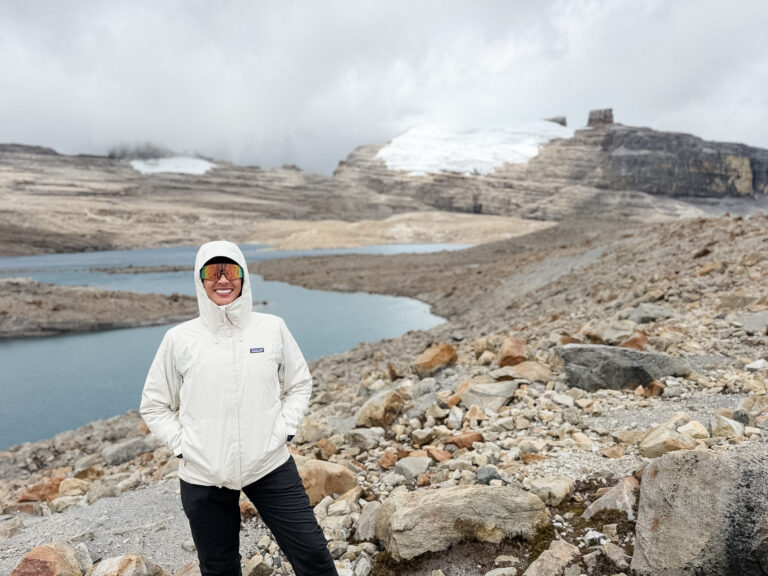
The trail moves through a series of distinct sections, and each one felt like its own small world. It starts with a steep climb out of La Esperanza. From there, it moves through what I believe is called the Cuchumba, into the Valle de los Frailejones, through the Puma sector, and finally into the súper páramo before reaching the lagoon itself.
This is also where we spotted a cusumbo moving quickly across the trail. It’s easy to miss things like that, since so much of your attention stays on the ground in front of you.
When the Altitude Hits
Some sections had loose gravel that made every step feel unstable. And then the altitude caught up with me. I got dizzy in a way I’d never experienced before. Closing my eyes for too long felt like I might pass out. My heart wasn’t racing exactly, but it was pounding hard, and every step felt like real effort. Our guide never rushed us. He kept repeating “camina a su ritmo,” walk at your own pace, and that patience made a real difference.
Laguna Grande de la Sierra is an out-and-back trail, and I’d argue that’s part of what makes it special. You get to see the same ground twice, from two completely different angles. On the way up, I’d been so focused on my breathing that I missed entire stretches. Coming back down, those same stretches felt brand new, like I was noticing color again for the first time.
Púlpito del Diablo: The Harder Second Hike
We did Púlpito del Diablo after a full rest day, and I’d recommend building that rest day in no matter what. Some people tackle both hikes back to back, but if you’re doing all three trails on one trip, a break in between is worth building into your plans.
Our rest day included a light hike up Cerro Mahoma, which gave us gorgeous views of the pueblo and kept our legs from going stiff between the bigger days. It made a real difference heading into Púlpito.
This trail is tougher. There’s a stretch that feels like a steep, near-vertical scramble, and it demands more from your legs and your balance than Laguna Grande does.
The route starts at Lagunillas, a small river valley lined with frailejones, then moves into La Plazuela, another páramo section where the altitude starts climbing fast. From there, you reach the base near the Hotelito Los Arenales sector, before a final stretch of mostly flat granite leads you up toward the snowline.
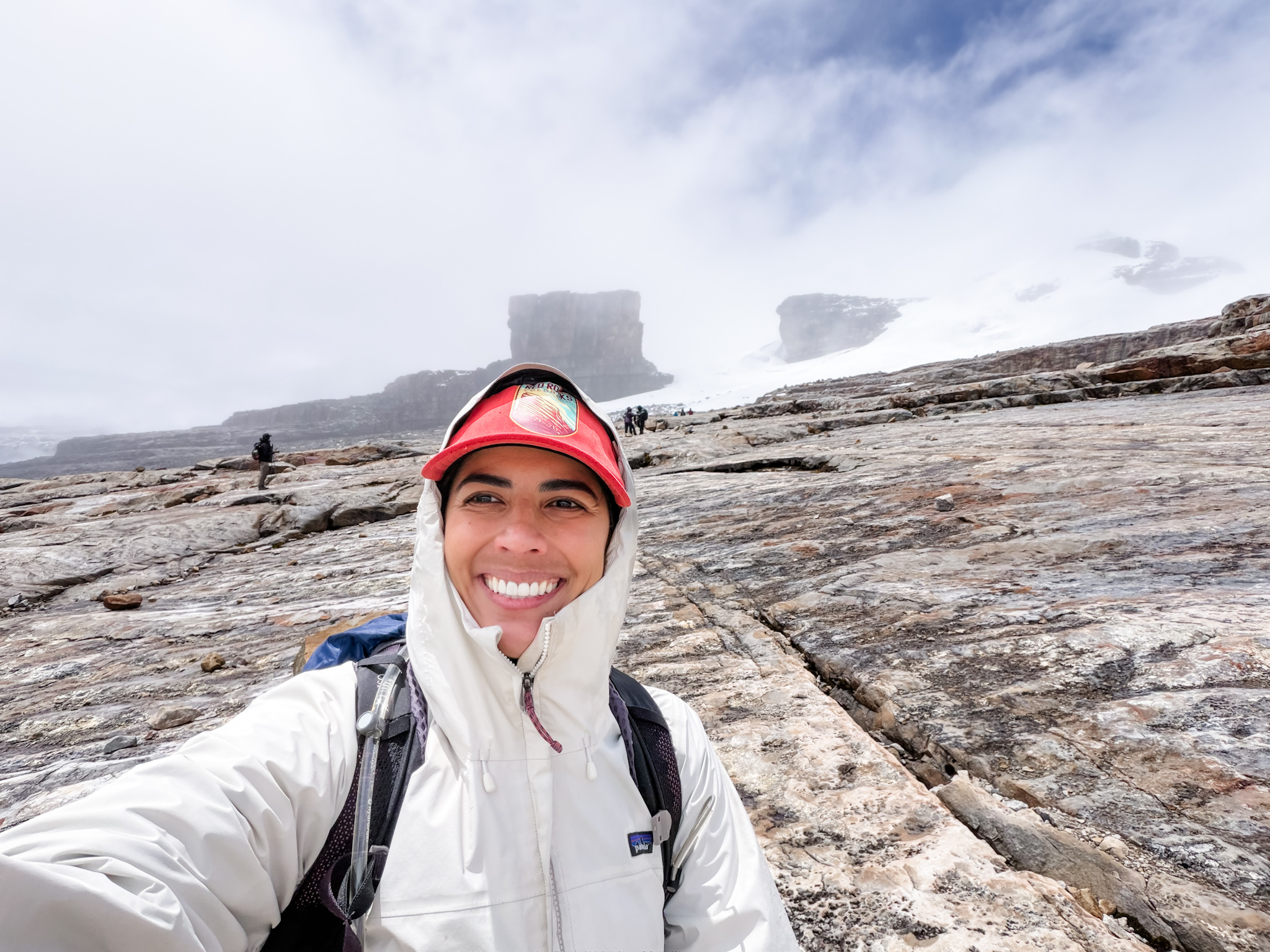
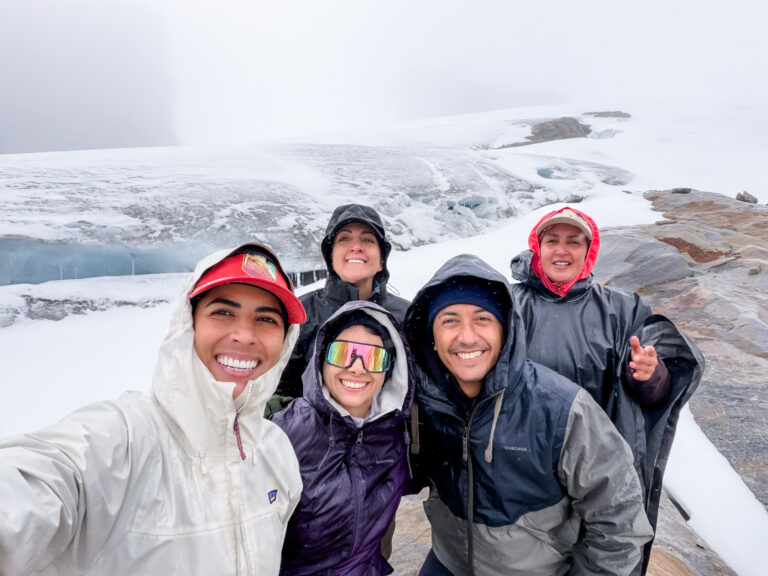
Weather turned on us that day. It was foggy, with rain turning to snow, so we didn’t linger long once we arrived at the top. We did catch a short window of blue sky, enough for a few good photos. And before reaching Púlpito I spotted a condor!
Why It’s Called Púlpito del Diablo
The name comes from an old local legend. As the story goes, during Semana Santa (Holy Week), the devil would ride through the pueblo on a black mule with fiery eyes, stirring up storms, torrential rain, and swirling winds that sent people into a panic. Local lore holds that he’d eventually settle on this rock formation, using it as his perch above the mountain. Colombian magical realism is so real.
Planning the Full Trip
I’m saving Ritacuba Blanco for a future trip, ideally one we can do with our kids someday. If we were building the full three-hike itinerary, it would look something like this: an acclimatization hike, then Laguna Grande de la Sierra, a rest day with a light hike and some time exploring the pueblo, then Púlpito del Diablo, another rest day with a light hike and a stop at the Termales de San Luis, then Ritacuba Blanco, and a slower day in Güicán before heading home.
If you’re only doing two hikes, I’d still recommend budgeting 3 to 4 days in El Cocuy itself. That’s not counting travel time getting there or back.
Hiking El Cocuy With Kids
Officially, kids 10 and up are allowed on these trails, but that number comes with a caveat worth taking seriously. A pueblo kid who’s grown up at 2,700 meters and a city kid turning 10 are not starting from the same place. Altitude, terrain, and the pace of mountain life are all things pueblo kids grow up with. For a city kid, all three are new at once.
If you’re planning to bring your own kids, especially ones who don’t get much altitude or trail time at home, treat 10 as the legal floor rather than a readiness marker. Waiting until closer to 12 or 13, once they’ve built up real hiking experience, is a more honest bar for a trek at this elevation.
That’s part of why we’re saving Ritacuba Blanco, the third and highest trail, for a future trip with our own kids, once they’re older and hopefully just as excited about it as we are. If you’re bringing kids now, Laguna Grande de la Sierra is the gentler starting point of the three, for the same reason it’s often scheduled first for adults: lower altitude, and a full day to build confidence before anything harder.
A few things that would matter more with kids in tow: build in extra acclimatization time, expect a slower pace than you’d set alone, and lean on your guide’s patience the same way we did. “Camina a su ritmo,” walk at your own pace, applies just as much to a ten-year-old as it does to a tired adult.
What It Costs
For four Colombian travelers, our total came to roughly 3 million COP. That covered:
- park entry
- insurance policies for two hikes across four people
- breakfast for three days
- lunches for both big hike days
- transportation to both trailheads plus a guide
- transportation to the Termales de San Luis
- a load of laundry
Foreign visitors pay more for park entry and I don’t have the exact extranjero rate. If that number matters for your planning, it’s worth confirming directly before you book.
Lodging adds to the total too. A stay at the hostal in the pueblo runs around 50,000 COP a night. There’s also the option of staying at a refugio inside the park, closer to the trailhead, which tends to run 85,000 COP or more depending on the season and which refugio you choose. Availability there is limited, so it’s not guaranteed. It’s also barebones (think very rustic cabins), but also come with gorgeous panoramic views of the mountains and paisaje.
Best Time to Go
The dry season runs December through March, and that’s your best window overall for clear trails and better visibility. January and December are also high season for national tourism, so expect more people in the pueblo and on the trail. That’s not all bad. It also means it’s easier to find other travelers to split guide and transportation costs with.
There’s a second, shorter dry stretch from June through August, which is worth considering if you’d rather skip the holiday crowds but still want better odds of clear weather.
Outside of those windows, rain becomes more likely and trails can get slicker. Conditions in the Sierra can still shift fast no matter when you go, so build in flexibility rather than expecting a guarantee of clear visibilty, whichever season you pick.
Permits and Registration
This part is refreshingly simple if you’re working with the right guide. Marta handles registration, permits, and insurance ahead of time. All you really need to do is show up ready to hike.
The El Cocuy trek asks a lot of you physically, but it gives just as much back. Laguna Grande de la Sierra and Púlpito del Diablo are different enough that doing both makes the trip feel complete, not repetitive. Just build in the rest days. Your legs, and your lungs, will thank you.
More El Cocuy Guides
- How to Get to El Cocuy, Colombia: The Full Route Guide: The route from Bogotá, bus options, driving tips, and where to stop along the way.
- Where to Stay in El Cocuy: Hostal El Caminante : Why this hostal, run by Marta, made both of our trips easy.
- The History of El Cocuy: Pueblo, U’Wa Culture, and the Páramo: The story behind the name, the U’Wa’s connection to the mountain, and what makes the páramo so rare.
- El Cocuy Packing List: What to Bring for the Trek: Everything that made it into our bags for two big hikes and one acclimatization day.


Leave a Reply