This post may contain affiliate links. Read my full disclosure here.
The El Cocuy trek isn’t one hike. The park currently authorizes three separate day-hike routes: Laguna Grande de la Sierra, Lagunillas–Púlpito del Diablo, and Ritacuba. Each has its own terrain and personality, and you don’t need to do all three to have a memorable trip.
Quick expectation check: these are high-mountain walks to viewpoints and glacier edges, not summit climbs. Glacier entry and camping are prohibited, so you stay on the authorized route with your guide.
We did two: Laguna Grande de la Sierra and Púlpito del Diablo. Here’s what each one was actually like, plus the planning details that mattered most.
Why I Keep Saying “Two Trips”
If you’ve read the other posts in this series, you’ve probably noticed me mention “both of my trips” more than once. Here’s the backstory, since this hike was actually attempt number three for me.
Attempt two was set for February 2026, but a hairline fracture in my toe from a backpacking trip in October 2025 pushed that one back too.
Laguna Grande de la Sierra: Our First Hike
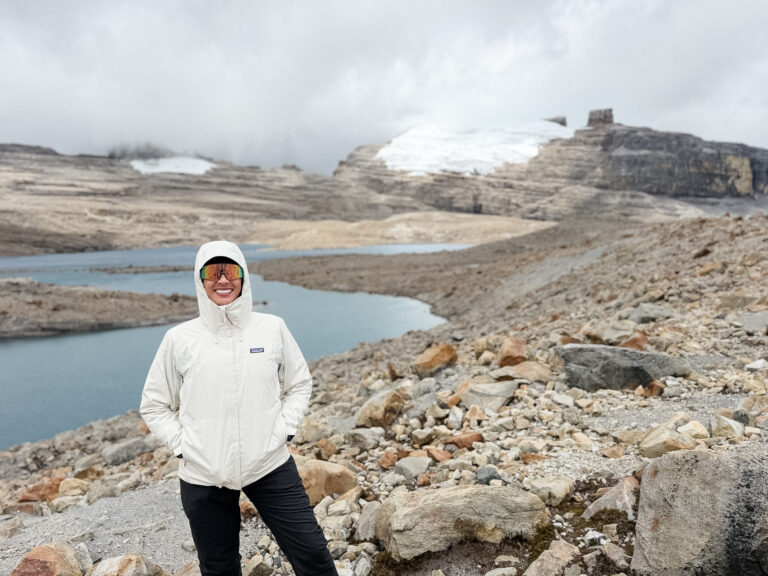
We started with Laguna Grande de la Sierra. That was our itinerary, but I wouldn’t call it an easy warm-up, and it isn’t the gentlest choice for everyone.
What the park says: the current route description lists about 19.6 km round trip for the full route to the Cóncavo glacier edge. The lagoon and that last glacier-edge viewpoint are two different destinations, so ask your guide where you’ll actually turn around and what conditions look like. A lake’s elevation alone doesn’t tell you how hard the whole day will be.
Our day started at 3:30am, with breakfast by 4am and a 4:30am departure. It took a little over an hour to leave the hostel, get to the park, check in, and stretch. The full hike ran close to 10 hours.
Those were our departure times, not the park’s hours. Visitor entry is currently 6 to 8am, so an early pickup gives you time for the drive and the control-point check-in.
The trail moved through a series of distinct sections, and each one felt like its own small world. We started with a steep climb out of La Esperanza. From there, as I remember it, came Cuchumba, the Valle de los Frailejones, the area I knew as the Puma sector, and finally the superpáramo before the lagoon itself. That’s my memory of the walk, not turn-by-turn directions, so follow your guide’s authorized route.
This is also where we spotted a cusumbo moving quickly across the trail. It’s easy to miss things like that, since so much of your attention stays on the ground in front of you.
When the Altitude Hits
Some sections had loose gravel that made every step feel unstable. And then the altitude caught up with me. I got dizzy in a way I’d never experienced before. Closing my eyes for too long felt like I might pass out. My heart wasn’t racing exactly, but it was pounding hard, and every step felt like real effort. Our guide never rushed us. He kept repeating “camina a su ritmo,” walk at your own pace, and that patience made a real difference.
A patient guide helped, but feeling unwell isn’t something to push through. Here’s what the CDC’s altitude guidance says to do:
- If you have symptoms: don’t go any higher, and tell your guide right away.
- If they get worse: go down.
- Emergency signs: confusion, trouble walking or breathlessness at rest need urgent help and descent.
I’m describing what I felt, not diagnosing that episode after the fact.
Laguna Grande de la Sierra is an out-and-back trail, and I’d argue that’s part of what makes it special. You get to see the same ground twice, from two completely different angles. On the way up, I’d been so focused on my breathing that I missed entire stretches. Coming back down, those same stretches felt brand new, like I was noticing color again for the first time.
Púlpito del Diablo: Our Harder Second Hike
We did Púlpito del Diablo after a full rest day, and I’d recommend building that rest day in no matter what. Some people tackle both hikes back to back, but if you’re doing all three trails on one trip, a break in between is worth building into your plans.
Our rest day included a light hike up Cerro Mahoma, which gave us gorgeous views of the pueblo and kept our legs from going stiff between the bigger days. It made a real difference heading into Púlpito.
Fair warning though: Cerro Mahoma is a high-altitude outing too. “Light” is how it felt for us. A quiet day in the pueblo might be the better rest day for you.
Púlpito felt tougher to me. There was a stretch that felt like a steep, near-vertical scramble, and it demanded more from my legs and my balance than Laguna Grande did. That’s how our two days compared for me, not a difficulty ranking for every hiker.
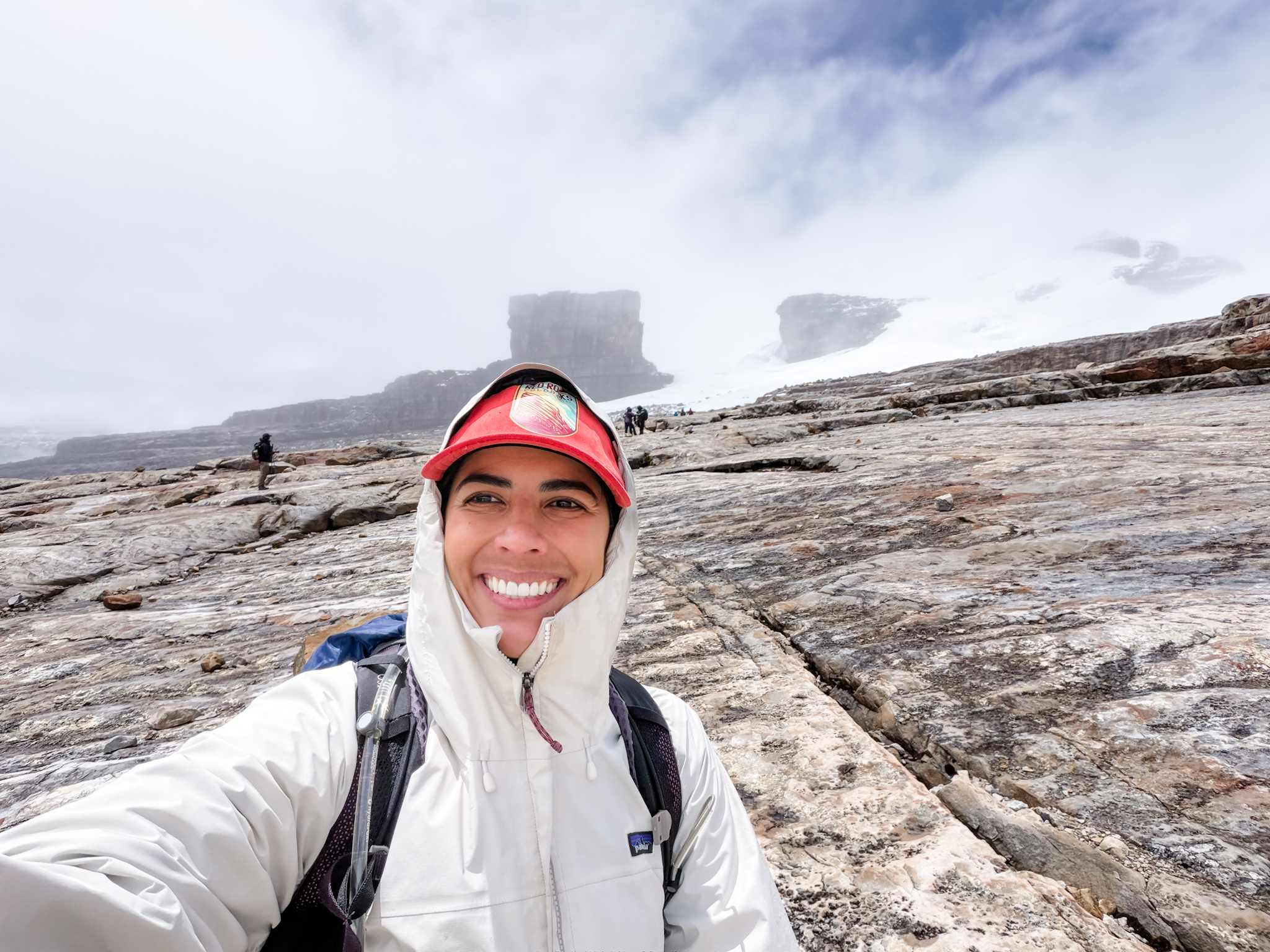
Our route started in the Lagunillas valley, lined with frailejones, then moved through La Plazuela and the El Hotelito sector. I remember a final stretch of mostly flat granite on the way toward the snowline. The park lists the full Púlpito route at about 15.6 km round trip, ending at the glacier edge. That doesn’t mean you can climb the rock or step onto the glacier.
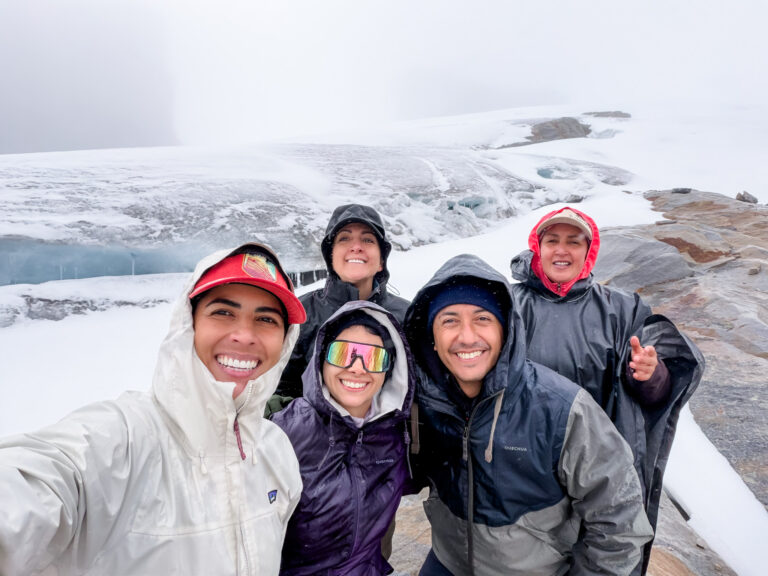
Weather turned on us that day. It was foggy, with rain turning to snow, so we didn’t linger long at our turnaround point. We did catch a short window of blue sky, enough for a few good photos. And before reaching Púlpito I spotted a condor!
Why It’s Called Púlpito del Diablo
Boyacá’s tourism guide ties the name to a local legend about the devil sitting on the rock at night and setting off snow and rock slides. It’s folklore, not established history. Colombian magical realism is so real.
Planning the Full Trip
I’m saving Ritacuba Blanco for a future trip, ideally one we can do with our kids someday. If we were building the full three-hike itinerary, it would look something like this: an acclimatization hike, then Laguna Grande de la Sierra, a rest day with a light hike and some time exploring the pueblo, then Púlpito del Diablo, another rest day with a light hike and a stop at the Termales de San Luis, then Ritacuba Blanco, and a slower day in Güicán before heading home.
That’s a wish-list itinerary, not a booked package or a fixed acclimatization plan.
The ticket catch: the park currently says an entry ticket is valid for four days. Three hike days with two rest days in between runs past that, so sort out the ticket and trail reservations before you build a longer trip. Check the current opening and booking details for the thermal baths too.
For two hikes, 3 to 4 days in El Cocuy itself was the sort of trip I had in mind, before adding travel time. That’s not a universal acclimatization schedule. Leave extra days for adjusting, resting and changing conditions, because one acclimatization walk doesn’t mean you’re ready for either big hike.
What the CDC says: its guidance explains that the early acclimatization process takes several days and that being fit doesn’t prevent altitude illness. Plan your ascent around your health, recent time at altitude and any symptoms, and get medical advice if you need it.
Hiking El Cocuy With Kids
The rule: the park prohibits entry for children under 10.
The reality: reaching the minimum age doesn’t mean a kid is ready for a long high-altitude hike. Recent altitude exposure, health and hiking experience matter more than whether they’re a pueblo kid or a city kid.
For my own kids, I’d rather wait until they’re older and have built up real hiking experience. I had 12 or 13 in mind. That’s a parenting preference, not a medical cutoff, and it doesn’t mean the trek becomes safe at that age. Talk to your child’s clinician and an authorized guide about your plans.
That’s part of why we’re saving Ritacuba for a future trip with our own kids, once they’re older and hopefully just as excited about it as we are. None of the three routes is an automatic beginner option. Laguna Grande’s full route is the longest of the three the park lists, so I wouldn’t pick it for kids just because the lagoon sits lower than a mountain summit.
A few things that would matter more with kids in tow:
- Extra acclimatization time.
- A slower pace than you’d set alone.
- A patient guide. Lean on theirs the way we did. “Camina a su ritmo,” walk at your own pace, applies just as much to a ten-year-old as to a tired adult.
- An easy way to say “I feel bad.” Children can develop altitude illness just like adults. Make it easy for them to tell you they feel unwell, and agree with the guide beforehand that turning back is part of the plan.
What We Spent and Current Park Fees
For four Colombian travelers, our total on that trip came to roughly 3 million COP. That’s what we spent, not a current package quote. It covered:
- park entry
- insurance policies for two hikes across four people
- breakfast for three days
- lunches for both big hike days
- transportation to both trailheads plus a guide
- transportation to the Termales de San Luis
- a load of laundry
- 30,500 COP: Colombian nationals, foreign residents in Colombia and CAN members, older than 10 through age 25.
- 52,500 COP: the same categories, older than 25 through age 62.
- 107,000 COP: nonresident foreigners who are not CAN members.
Lodging adds to the total too. The figures I originally shared were around 50,000 COP a night for the hostal in the pueblo and 85,000 COP or more for refugio-style places near the trailheads. Those are historical numbers, not current quotes, so confirm the room, who it sleeps, meals and price when you book.
The cabins I described were barebones (think very rustic), with gorgeous panoramic views of the mountains and paisaje. Availability can be limited, so check before you plan around one.
One correction to what I first wrote: overnight stays and camping aren’t permitted inside the protected area. Wherever you book has to be outside it, even if it’s marketed as close to the park. My El Caminante story covers where we stayed.
Best Time to Go
Dry season: December through March is generally the drier window on the western side of the Sierra. That’s not a promise of clear trails or blue skies. The park’s climate history describes the broad pattern. Around holiday dates, book ahead and ask your operator whether they can group travelers to share guide and transport costs. I wouldn’t build a budget around finding people to split with once you arrive.
Midyear: there can be a drier spell around July, but I wouldn’t count all of June through August as a reliable second dry season. Official sources don’t agree on it. Colombia’s tourism guide suggests July–August, while the park’s climate records show a more variable pattern.
Weather: rain, fog and snow can change a hiking day in any season, like they did for us. Build in flexibility and pack for wet and cold. My El Cocuy packing list covers the kit and water planning.
Access: check current trail and road access with the park and your guide before you travel. Flood damage temporarily restricted Laguna Grande and Ritacuba in July 2026. The July 17 reopening notice is a good reminder that “the park is open” doesn’t guarantee every access road or a future hiking date.
Permits and Registration
Marta helped us with registration, permits and insurance ahead of our trip, which made the planning so much easier. Ask your host or operator what they’ll arrange for your dates and what’s still on you.
Before your hiking day
- Confirm a place on each trail, your admission category and an authorized guide or heritage interpreter.
- Get the required accident-and-rescue insurance. A general travel policy isn’t automatically the same thing.
- Do the registration and the visitor induction beforehand. The park’s ecotourism annex requires both at least the day before entry, and the current visitor page offers in-person or virtual induction.
- Bring the ID and the entry, registration and insurance documents the park asks for. Confirm which foreign ID is accepted and whether you need originals. Phone copies are good backups, but don’t count on them being accepted.
On the day
- Hours: under Resolution 125 of 2020, entry is 6–8am, descent from the glacier edge has to start by 1pm, and everyone must be out by 5pm. Your guide may set an earlier turnaround.
- Gear: bring the required hiking kit.
- Trash: take your waste back out and leave single-use plastics behind.
Confirming the details
For current reservations and requirements, use the official park page or email ecoturismococuy@parquesnacionales.gov.co. The booking-lead-time wording on the park’s page is inconsistent, so confirm the booking window directly.
The El Cocuy trek asks a lot of you physically, but it gives just as much back. Laguna Grande de la Sierra and Púlpito del Diablo are different enough that doing both makes the trip feel complete, not repetitive. Just build in the rest days. Your legs, and your lungs, will thank you.
More El Cocuy Guides
- How to Get to El Cocuy, Colombia: The Full Route Guide: The route from Bogotá, bus options, driving tips, and where to stop along the way.
- Where to Stay in El Cocuy: Hostal El Caminante : Why this hostal, run by Marta, made both of our trips easy.
- The History of El Cocuy: Pueblo, U’Wa Culture, and the Páramo: The story behind the name, the U’Wa’s connection to the mountain, and what makes the páramo so rare.
- El Cocuy Packing List: What to Bring for the Trek: Everything that made it into our bags for two big hikes and one acclimatization day.

Leave a Reply