Pregnancy in Medellín: Complete Childbirth Guide (2024)
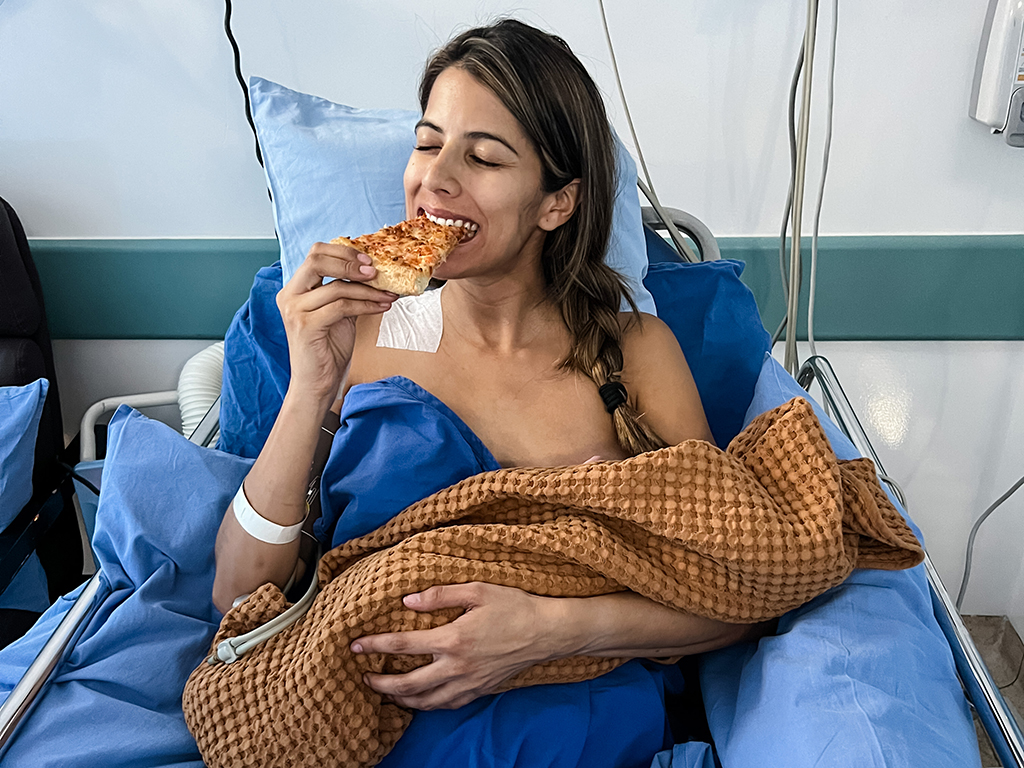
If you’re navigating pregnancy in Medellín and wondering what childbirth actually looks like here, I’ve been through it twice. A mother’s choice from how she manages her pregnancy all the way up to how and where she delivers is deeply personal. What worked for me may not work for you. I opted for more traditional births and would like to provide some context before you read further to ensure this information will be helpful and relevant for you:
- All three of my children were born in hospitals, one in the United States and the other two in Medellín at the same hospital.
- I was 4 months pregnant with my son (second) when I moved to Medellín.
- I went through my entire pregnancy in Medellín for my third.
- I had a doula for the birth of my second and third.
- I have had and will ask for the epidural.
- I was not insured in Colombia for my second. I had SURA Global with my third.
In my experience, the difference between delivering in the United States and Colombia was neither good nor bad – just different. I’m glad to have had the opportunity to experience both and share them here. If asked, I would say I preferred my labor & delivery experience here in Colombia. It was hard for me to find shared experiences of what a traditional delivery looked like in Colombia and was nervous about what to expect. My experience may not be yours but I’ll share resources I’ve found along the way in hopes of helping you in your pregnancy and delivery journey, including:
- Health Insurance for Pregnancy in Medellín (EPS vs. Private)
- EPS: Colombia’s Public Health System
- Why I Recommend SURA for Childbirth
- Questions to Ask Your Insurance Agent
- EPS vs. Private: What to Know
- How Much Does It Cost to Have a Baby in Medellín?
- How to Find an Obstetrician in Medellín
- What to Look for in a Colombian OB
- Things to Know Before Booking
- Lab Work, Ultrasounds, and Managing Your Own Results
- What I Paid Without Insurance vs. With SURA
- C-Section Rates in Colombia: What You Should Know
- Hiring a Doula for Childbirth in Colombia
- What to Expect at a Medellín Pregnancy Hospital
- Admission and Paperwork
- Labor, Delivery, and Hospital Stay
- How Long Will You Stay?
- Things to Know About Clínica El Rosario
- Hospital Bag Checklist: What to Pack for Childbirth in Colombia
- After Delivery: Leaving the Hospital and Birth Certificate Paperwork
- My Recommended Pregnancy Care Team in Medellín
- After Baby: Registro Civil, U.S. Citizenship & Colombian Passport
- Frequently Asked Questions About Pregnancy in Medellín
Health Insurance for Pregnancy in Colombia (EPS vs. Private)
Disclaimer: Always consult with an insurance agent to review your needs and insure the final coverage you pick is right for you and your family. Below are a few things that I’ve learned going through the process of getting insured in Colombia.
EPS: Colombia's Public Health System
EPS is Colombia’s public health care system. It is the law that all legal residents in Colombia must have the same basic coverage, which covers medical, dental, and vision care. If you want more coverage, you can purchase a private policy in addition to your EPS plan. If you have a cédula de ciudadanía or a cédula de extranjería that hasn’t expired, you are a legal resident. They’re trying to move into privatized health insurance under the current presidential administration. As it stands at the time of this post, EPS looks like is coming to an end but nothing is finalized yet.
Why I Recommend SURA for Childbirth in Colombia
Either way, there are a few private healthcare companies to choose from, but for a pregnancy in Medellín or anywhere in Colombia, I would recommend going with SURA. It’s the most popular and widely accepted which means it won’t limit you on where and what kind of care you can receive throughout your pregnancy to delivery . You can always switch to other insurance companies, like Allianz, after you deliver.
Questions to Ask Your Insurance Agent
Important questions to ask are:
- When I sign up will be I be insured immediately?
- I have SURA Global and was insured immediately.
- How long do I need to be affiliated before I am eligible for the childbirth to be covered.
- It was only 30 days for my delivery to be covered. I also signed up with my partner and child 10 months prior to the baby’s due date. I’ve heard it taking less time for those who affiliate with their partner than it does if they sign up on their own.
- How much coverage do I need?
- I would opt to pay for more coverage because you never know what your pregnancy and childbirth will be like. Each of my pregnancies have been different. My most recent involved an of ER visit for what I found out were kidney stones when I was 8 months pregnant and had no ER visits with my first two. We all hope for healthy, smooth sailing experiences but emergencies during childbirth also happen and extended stays in the ICU for you or your baby are entirely possible. If you have the option to choose, I would elect the highest coverage you’re able to afford.
EPS vs. Private: What to Know
If you decide to go with the basic EPS coverage, know that wait times are long and the care is inconsistent. The OB doctors can change from visit to visit and it’s not guaranteed that a doctor you’ve seen will be the one to deliver your baby. If vaginal delivery is important to you, I would ask what are the chances you’re able to do so because to my understanding, EPS doctors are much more likely to perform c-sections than private doctors.
What happened with me is not a guarantee that it’ll happen for you. Sometimes it can feel like the rules are always changing which is why it’s so important to speak to an insurance agent to discuss your needs and pick the plan that’s right for you. If you’re looking for one, I’d recommend joining the Medellin international moms (and friends) Facebook group. Dozens of agents have been recommended or you can always post if you’re looking for something more specific. It’s been a helpful resource my family and I!
How Much Does It Cost to Have a Baby in Medellín?
One of the biggest differences between having a baby in the United States and Colombia is cost. In the U.S., the average out-of-pocket cost for pregnancy and childbirth is around $2,700–$3,000 even with employer insurance, and the total billed cost averages over $18,000. In Medellín, the numbers look very different.
With my second pregnancy in Medellín, we were not insured in Colombia. I paid for everything out-of-pocket or “particular“: OB appointments, the hospital stay, lab work, ultrasounds, my doula, and the delivery fee. For an uncomplicated vaginal delivery with a one-night hospital stay, the total came to approximately $2,000–$2,500 USD. The hospital stay alone at Clínica El Rosario was about $1,300 USD.
With my third, we had SURA Global insurance. Everything from prenatal visits to delivery was covered. Our total out-of-pocket balance at discharge? $11 USD. That’s not a typo. If you can get insured before becoming pregnant and plan your pregnancy in Medellín around it, do it!
Here’s a rough breakdown of what to budget if you’re paying particular (out-of-pocket) in Medellín:
| Item | Approx. Cost (USD) |
|---|---|
|
OB appointments (monthly, ~8–10 visits) |
$30–$60 per visit |
|
Detailed ultrasounds (MAFEM or similar) |
$40–$80 each |
|
Lab work / bloodwork |
$20–$100 per panel |
|
NIPT test (Gencell, optional) |
$300–$500 |
|
Doula |
$500–$1,000 |
|
Hospital stay + vaginal delivery |
$1,200–$1,800 |
|
C-section (if needed) |
$2,000–$3,500 |
|
OBGYN for Delivery |
$1,000-$1,500 |
These numbers reflect my experience in 2022–2024 and what I’ve heard from other moms. Costs can vary depending on the hospital, provider, and whether complications arise. If you’re planning to deliver in Medellín, I’d budget on the higher end and hope for the lower end. And if you can get insured before becoming pregnant, do it!
How to Find an Obstetrician in Medellín
I started with establishing myself as a patient with an obstetrician. I’ve heard others start with the hospital first and then try to find a doctor who delivers there. I felt that if I found a doctor I trusted enough, it didn’t matter where I delivered. I created a pregnancy guide with recommended OBs, doulas, and resources here that includes a list of previously recommended obstetricians by other moms in Facebook groups and to me personally.
The Medellin moms Facebook group was also helpful when searching for a provider. I first searched previous posts and came across a slew of recommendations. If you’re not sure how to search previous posts, this link explains how. If you can’t find what you’re looking for and are going to ask, be descriptive and share what kind of doctor and/or experience you’re looking for to help get the answers you need.
What to Look for in a Colombian OB
I was looking for someone who was preferably bilingual and an advocate for vaginal birth unless the baby or I needed intervention for our health and safety. I had heard from Colombian and foreign mothers alike that OBs in Colombia are much more likely to perform cesareans – especially depending on which insurance you have. My OB had a patient who preferred vaginal delivery unless medical intervention was required. She had been laboring for 25+ hours. Other doctor’s were in disbelief and asked my OB “Why don’t you just cut her and get it over with?” to which she replied, “She doesn’t want that. Mom and baby are stable and healthy, there’s no need.” That was the kind of advocacy I was looking for.
Things to Know Before Booking
- Depending on the provider, it could take three months or more to get an appointment as a new patient, if they’re accepting new patients. Plan accordingly.
- Be mindful of Colombian holidays or “festivos” especially around Christmas. Some offices shut down for 3–5 weeks starting mid-December. Ask your OB about their holiday plans and what coverage they’ll have in place if they are unavailable.
- With my OB, her office isn’t a one-stop shop where your bloodwork and detailed ultrasounds happen at the same time as your scheduled appointment. She does a basic ultrasound at every visit. At the end of each appointment she gives you your prescription or “fórmula” for what needs to be done by when.
Lab Work, Ultrasounds, and Managing Your Own Results
If you have SURA you can go to their offices like Sao Paolo or Industriales to get most exams done. If you’re not insured:
For lab work: Labratorio Clinico Hematologico or Laboratorio Echavarria have locations all over Medellin. I used Echavarria since they had a location walking distance to me. Staff and experience were both great. Accessing most of my results online made it super easy. They also accept SURA.
For detailed anatomy scans and ultrasounds: MAFEM. I had a really lovely experience with Dr. Raúl García Posada. Avoid Dr. Esteban Mauricio Orozco González based on multiple complaints shared by other moms. They also accept SURA.
It was my responsibility to get the results and forward to my OB via WhatsApp as opposed to relying on the other offices to communicate with each other on my behalf. Usually they sent me the results via WhatsApp or available to download online.
I got my noninvasive prenatal testing (NIPT) test done through Gencell at 10 weeks and the results back 2.5 weeks later. They even came to the house to draw the sample. This was not covered by insurance.
What I Paid Without Insurance vs. With SURA
For my second, I was already diagnosed with gestational diabetes and therefore uninsurable, so I paid “particular” (private/out-of-pocket). I paid for all my OB appointments and her delivery fee directly. The hospital invoice, bloodwork, and ultrasounds I also paid for separately.
For a vaginal delivery with no complications — the overnight stay, my OB, doula, and other hospital fees — I paid around $2,000–$2,500 USD (~$1,300 USD for the hospital stay alone) since I wasn’t insured. With my third, we had SURA Global and our balance was $11 USD.
C-Section Rates in Colombia: What You Should Know
If you’re researching childbirth in Colombia, you’ve probably come across warnings about high c-section rates. And they’re not wrong. South America has the highest regional c-section rate in the world at roughly 43%, and Colombia is right in line with that trend. The WHO recommends a rate between 10–15%.
From what I’ve experienced and heard from other moms here, c-sections in Colombia are more common in a few specific situations:
- when you’re on EPS (public insurance) where scheduling is tighter and doctors rotate more frequently
- when your OB leans toward intervention as a default
- when there’s a perceived convenience factor. Especially in private practice where scheduled deliveries fit neatly into a doctor’s calendar.
That doesn’t mean a vaginal delivery isn’t possible or supported during pregnancy in Medellín. It absolutely is. But you need to advocate for it early and clearly. Here’s what helped me:
- I asked my OB directly about her c-section rate and philosophy during our first appointment.
- I chose a provider who treated vaginal delivery as the default unless there was a medical reason not to.
- I worked with a doula who reinforced my birth preferences and communicated with my OB throughout labor.
- I put my delivery preferences in writing and discussed them with my team well before my due date.
The story I shared earlier about my OB defending her patient’s right to continue laboring when other doctors told her to just perform the surgery. That’s the kind of provider you want. They exist in Medellín. You just have to look for them and ask the right questions upfront.
Hiring a Doula for Childbirth in Colombia
I didn’t have a doula in the United States and decided to have a doula in Colombia. My number one reason was so that my partner and I could focus on laboring and not translating. My Spanish is decent but medical terminology is a different ballgame. We had such a great experience, we hired her again for our third. Bonus: My doula and OB are good friends IRL so it was a friendly, familiar, relaxed energy in the delivery room.
She kept my OB up-to-date the entire time so I didn’t have to, helped with labor exercises, and routinely checked in on me to see if there was anything I needed. A week post-delivery, she checked in (and a couple of times after that) to see how I was doing and if she could help support me. Throughout the process she was patient, kind, and helpful answering my questions. If a doula is something you’re exploring for your pregnancy in Medellín, I would absolutely recommend it.
What to Expect at a Medellín Pregnancy Hospital
Admission and Paperwork
With my second, it felt like an eternity between arriving at Clinica El Rosario Sede Tesoro until getting settled into the delivery room. Mostly because I was progressing so quickly and having to fill out paperwork because I was paying particular, or basically out-of-pocket, in between very painful, intense contractions.
Since I was insured with my third, I skipped the paperwork on the front end with an “orden de parto” to prove to admissions that the hospital would get paid. To my knowledge this is only available if you’re insured. Your OB’s office submits what’s needed to your insurance provider and then sends you the papers to print and give to admissions when you arrive.
Admission was comparable to the States. Get through triage, find out how far dilated you are, and choose whether or not you want the epidural. My partner took care of putting my hospital bag away and grabbed the separate ziploc bags with things for baby, me, and our portable speaker. I had to remove all my jewelry. I didn’t experience this personally, but have heard some doctors ask that you have no nail polish, gel, or acrylic on your hands and feet.
Labor, Delivery, and Hospital Stay
In terms of actual labor & delivery, after getting the epidural it was very chill. We were doing labor exercises with a medicine ball while l was laying down or when I was able to walk a little and bounce. I didn’t feel rushed at all and thankfully things were going smoothly with both my second and third. What I appreciated most about the entire experience during my pregnancy in Medellín was being able to listen to my body and ended up giving birth in a way that served both my kids and I that didn’t require me to move into any one particular position. I don’t believe I would have had the same opportunity to experience it in the U.S.
Once they were out, it was immediate skin-to-skin. They cut the umbilical cord and got their vitals. After they were swaddled, we moved out of the delivery room into a holding area to wait for our room. In Colombia, newborns are vaccinated for tuberculosis meningitis and Hepatitis B. We deferred to do this the following day.
How Long Will You Stay?
Something to keep in mind is whether delivering vaginally or c-section – if mom and baby are safe and sound, you’ll likely stay one, maybe two, nights in the hospital. I had a vaginal delivery with my son at 2pm on a Saturday and we were discharged at 5pm on Sunday. Similar experience with my third. One of the reasons is maternity services are not profitable according to Luis Hernán Sánchez, director of the Association of Public Hospitals of Antioquia. Since maternity services are not considered profitable, a number of hospitals have closed their labor & delivery wards to open up services that generate more revenue which means there are less beds available as a whole. While the number of births in Colombia has decreased since 2021*, they’re not looking for you to stay longer than you need to and saving what beds they do have for people who need them. (*Source: El Departamento Administrativo Nacional de Estadística)
Things to Know About Clínica El Rosario
Something to keep in mind is whether delivering vaginally or c-section – if mom and baby are safe and sound, you’ll likely stay one, maybe two, nights in the hospital. I had a vaginal delivery with my son at 2pm on a Saturday and we were discharged at 5pm on Sunday. Similar experience with my third. One of the reasons is maternity services are not profitable according to Luis Hernán Sánchez, director of the Association of Public Hospitals of Antioquia. Since maternity services are not considered profitable, a number of hospitals have closed their labor & delivery wards to open up services that generate more revenue which means there are less beds available as a whole. While the number of births in Colombia has decreased since 2021*, they’re not looking for you to stay longer than you need to and saving what beds they do have for people who need them. (*Source: El Departamento Administrativo Nacional de Estadística)
I can’t speak for all hospitals, but at Clinica El Rosario in Medellín in 2023 & 2024:
- There is no newborn overnight care help. Baby stays with mom 24/7.
- There are no car seat technicians to help make sure your car seat is installed correctly. Car seat culture in Colombia is a different story.
- I wouldn’t bring your breast pump in hopes of getting a deep-dive run through with a lactation consultant. Hospital grade breast pumps some are used to using or seeing in the USA aren’t as common here. If you’re looking for breastfeeding support, that’s something you’ll likely need to find through your pediatrician and if you have SURA they’ll email asking you want to be connected with someone for lactation support.
It was comparable to being admitted in the States — get through triage, find out how far dilated you are, ask if you want the epidural or not. My partner took care of putting my hospital bag away and was sure to grab the separate ziploc bags that had things for baby, me, and our portable speaker. I had to remove all my jewelry and I didn’t experience this, but have heard some doctors ask that you have no nail polish, gel, or acrylic on your hands and feet.
In terms of actual labor & delivery, after getting the epidural it was very chill. We were doing labor exercises with a medicine ball while l was laying down or when I was able to walk a little and bounce. I didn’t feel rushed at all and thankfully things were going smoothly with both my second and third. What I appreciated most about the entire experience during my pregnancy in Medellín was being able to listen to my body and ended up giving birth in a way that served both my kids and I that didn’t require me to move into any one particular position. I don’t believe I would have had the same opportunity to experience it in the U.S.
Once they were out, it was immediate skin-to-skin. They cut the umbilical cord and got their vitals. After they were swaddled, we moved out of the delivery room into a holding area to wait for our room. In Colombia, newborns are vaccinated for tuberculosis meningitis and Hepatitis B. We deferred to do this the following day as opposed to immediately right after birth.
Something to keep in mind is whether delivering vaginally or c-section – if mom and baby are safe and sound, you’ll likely stay one, maybe two, nights in the hospital. I had a vaginal delivery with my son at 2pm on a Saturday and we were discharged at 5pm on Sunday. Similar experience with my third. One of the reasons is maternity services are not profitable according to Luis Hernán Sánchez, director of the Association of Public Hospitals of Antioquia. Since maternity services are not considered profitable, a number of hospitals have closed their labor & delivery wards to open up services that generate more revenue which means there are less beds available as a whole. While the number of births in Colombia has decreased since 2021*, they’re not looking for you to stay longer than you need to and saving what beds they do have for people who need them. (*Source: El Departamento Administrativo Nacional de Estadística)
I can’t speak for all hospitals, but at Clinica El Rosario in Medellín in 2023 & 2024:
- There is no newborn overnight care help. Baby stays with mom 24/7.
- There are no car seat technicians to help make sure your car seat is installed correctly. Car seat culture in Colombia is a different story.
- I wouldn’t bring your breast pump in hopes of getting a deep-dive run through with a lactation consultant. Hospital grade breast pumps some are used to using or seeing in the USA aren’t as common here. If you’re looking for breastfeeding support, that’s something you’ll likely need to find through your pediatrician and if you have SURA they’ll email asking you want to be connected with someone for lactation support.
Hospital Bag Checklist: What to Pack for Childbirth in Colombia
When having a baby in the USA, you’re constantly being reminded to take any leftover freebies from your hospital stay because there’s a stock of items ready and waiting for you and baby — diapers, wipes, postpartum care materials. The only thing Rosario provided for the baby was formula if they needed it. For moms, there are pain medicines they’ll provide if necessary but the hospital in Colorado gave me stool softeners immediately after delivering my first. In Colombia, I had to bring my own for my second. IYKYK.
Here’s my suggested packing list. If you forget something at home, there is a little pharmacy store in the hospital that might have what you need or you can probably order it on Rappi.
Your Medellín Hospital Bag Checklist
A printable packing list for moms delivering in Colombia — including what the clínica provides and what you actually need to bring.
Thank you!
You have successfully joined our subscriber list.
After Delivery: Leaving the Hospital and Birth Certificate Paperwork
Unlike the United States – you DO NOT have to submit your child’s “registro civil de nacimiento” or birth certificate before leaving the hospital.
Be aware that there will be a notaría representative that floats around who is there to help you file and submit your newborn’s registro civil de nacimiento — except on Sundays. Ask them what notaria they’re from and where they’re located. This is important because if you sign up with them, you have to go to that same notaria whenever you need to do anything involving your child’s birth certificate such as replacing a lost copy. From the other mom’s (including Colombians) I’ve asked – this is common across all hospitals. I would ask if you end up doing a hospital tour or check with your doctor to confirm.
For example, you could live in say Laureles and the notaria that day is a rep from an office in Itagüí. Every time you need to do something involving your child’s birth certificate, you’d have to go to that office in Itagüí. Even if there’s a notaria one block away from where you live in Laureles, there is no shared information across notary’s here. You will always have to go to that notaria in Itagüí.
Keep your hospital papers in a safe place. This is why I recommend packing a folder in your hospital bag. There’s a lot of shuffling around and documents could easily get misplaced. You will have all the paperwork you need to bring with you when you go to the notaria to get your child’s birth certificate.
Papers I received were:
- Keepsake of baby’s birth stats and footprints
- Vaccine card
- Original and a copy of the Certificado de Nacido Vivo: You need both documents to get their registro civil de nacimiento (birth certificate). This must be done within 30 days of baby’s birth or else the documents expire.
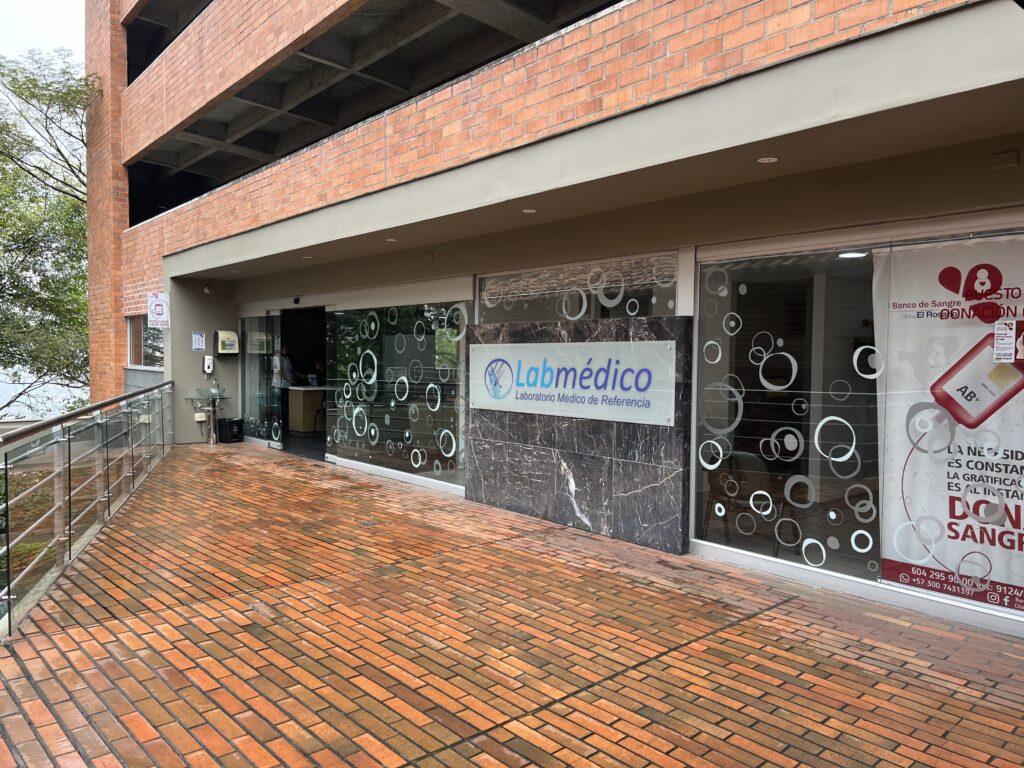
- Labmédico receipt from baby’s lab work
- Follow up prescriptions and orders:
- Tamizaje metabólco y potenciales auditivos: Blood work and newborn hearing screening test
- Pediatrician appointment 48-72 hours after discharge
- Gynecologist appointment one week post-delivery
- Supplements for baby: Biogaia baby drops for vitamin D and gut & immune health
Two things you need to do before you leave the hospital:
- Get squared away with accounting. Once you’ve been cleared by your gynecologist and the hospital’s pediatrician, administration will call your room letting you know you can come down to pay. They’ll give you a receipt to give to the nurse to prove you’ve paid and then you’ll begin the discharge process.
- Stop by the laboratorio office, Labmédico. The lab work includes the baby’s blood type and Rh factor. You need to bring this with you to get baby’s birth certificate. The first time, I picked up the results at Clinica El Rosario 2-3 days after I was discharged. The second time, I stopped at the laboratory (Labmédico) on our way out to provide my email address. It’s located on the left-hand side next to “Doggers” as you exit the hospital and approach the parking garage. I received the results via email the day after we were discharged.
My Recommended Pregnancy Care Team in Medellín
I truly felt like I had the A-squad care team from start to finish throughout my pregnancy in Medellín. Happy to recommend:
- Obstetrician: Dr. Juana Orrego Molina
- Doula: Susana Castro
- Hospital: Clinica El Rosario – Sede Tesoro
- Labwork/Bloodwork: Labratorio Clinico Hematologico or Laboratorio Echavarria
- Ultrasounds: MAFEM (ask for Dr. Raúl García Posada)
- Lactation Consultant: Smile House Odontología
Comunidad Ser Mama is a great resource and community to follow for navigating a pregnancy in Medellín. They have various events that support both mom’s and dad’s throughout the year. There is also a big festival where pediatricians, lactation consultants, nutritionists, other specialists, and kid-focused companies attend.
After Baby: Registro Civil, U.S. Citizenship & Colombian Passport
While adjusting to all the newborn newness and enjoying the sweet snuggles, I personally prefer completing all the other paperwork as soon as I can while I’m on maternity leave. For me, after wrapping up my pregnancy in Medellín, that meant getting my child’s:
- Registro civil de nacimiento and Colombian passport: Here’s a blog post sharing the process for both, what documents I needed, and how much it cost. You must get the registro civil de nacimiento first in order to get the Colombian passport as well as to secure their U.S. citizenship.
- United States Consular Report of Birth Abroad (CRBA), United States passport and United States Social Security Card: This blog post explains how I applied and received my children’s paperwork to get their U.S. citizenship and passports.
If you had any questions about my experience that I didn’t cover, please comment below!
Frequently Asked Questions About Pregnancy in Medellín
Q1: How much does it cost to have a baby in Colombia without insurance?
For an uncomplicated vaginal delivery in Medellín, expect to pay approximately $2,000–$2,500 USD out-of-pocket. This covers the OB’s delivery fee, hospital overnight stay, and basic lab work. A c-section will run higher, typically $2,500–$3,500 USD depending on the hospital and whether any complications arise. These costs are a fraction of what you’d pay in the United States. We paid $15,000 with my first.
Q2: What insurance do I need for pregnancy in Medellín?
All legal residents (tourist visas do not count) in Colombia must have EPS (public health coverage), but for pregnancy and delivery I’d recommend adding private insurance. SURA is the most widely accepted and won’t limit your choice of provider or hospital. I had SURA Global, was insured immediately, and my delivery was covered after 30 days of affiliation. Sign up with your partner to potentially shorten the waiting period!
Q3: Can I have a vaginal birth in Colombia or will they push for a c-section?
Vaginal delivery is absolutely possible in Colombia, but you have to advocate for it. C-section rates in South America are among the highest in the world (~43%), and some OBs default to scheduling cesareans for convenience. Choose a provider who supports vaginal birth, discuss your preferences early, and consider working with a doula. My OB was a strong advocate for letting labor progress naturally as long as mom and baby were stable.
Q4: What hospital should I deliver at in Medellín?
I delivered both of my Medellín babies at Clínica El Rosario Sede Tesoro and had positive experiences. Other hospitals commonly recommended by moms in the community include Clínica Las Américas and Clínica del Prado. My advice: find an OB you trust first, then deliver wherever they have privileges. The doctor matters more than the building.
Q5: What documents do I need after giving birth in Colombia?
You’ll leave the hospital with a Certificado de Nacido Vivo (certificate of live birth), your baby’s vaccine card, and lab work results. You’ll need the Certificado de Nacido Vivo to get your child’s registro civil de nacimiento (birth certificate) at a notaría within 30 days.
Pro tip: ask the notaría representative at the hospital which office they’re from and where it’s located. You’ll be tied to that specific notaría for all future birth certificate needs.
MEET SARAH
Welcome! I’m Sarah. I started this blog to be a resource for others around a few of my favorite things: living in Colombia, DIY projects, places traveled, and day-to-day life. My hope is that it can a place of inspiration and encouragement to help you plan the next project or adventure of your own!



2 thoughts on “Pregnancy in Medellín: Complete Childbirth Guide (2024)”
Hey Sarah! I leave in the USA but I am from Colombia, I’m pregnant and I am think to have my baby in Colombia do you think it will be possible to do that? I mean to start all the doctor appointments here and at some point before my due date travel to Colombia and give birth there.
let me know your thoughts.
Thank you
Hi Kristina! Absolutely and congratulations! I was 4 months pregnant with my second when we moved here and it’s totally possible, just depends on what kind of birth experience you’re looking for. I have a pregnancy guide on my blog as well with some resources as to OBGYNs, doulas, and other pregnancy support. We didn’t have insurance and I didn’t have my EPS set up when we moved but labor & delivery costs were still minimal especially compared to the USA, something to consider. I loved my childbirth experiences here tho.