This post may contain affiliate links. Read my full disclosure here.
If you’re navigating pregnancy in Medellín and wondering what childbirth actually looks like here, I’ve been through it twice. Everything from how you manage your pregnancy to how and where you deliver is deeply personal, and what worked for me may not work for you. I went with more traditional births, so here’s a little context before you read on.
Factual information reviewed October 24, 2026. My birth stories and costs are history, mostly from 2022–2024. I call out the current rules separately. Use this guide to build your question list for your care team, insurer and registration office, because your care, coverage and paperwork depend on your situation.
- All three of my children were born in hospitals, one in the United States and the other two in Medellín at the same hospital.
- I was 4 months pregnant with my son (second) when I moved to Medellín.
- I went through my entire pregnancy in Medellín for my third.
- I had a doula for the birth of my second and third.
- I have had and will ask for the epidural.
- I was not insured in Colombia for my second. I had SURA Global with my third.
Delivering in the U.S. and delivering in Colombia were neither good nor bad, just different. I’m glad I got to do both and share them here. If you twist my arm, I preferred my labor & delivery experience here. When I was pregnant I couldn’t find anyone sharing what a traditional delivery in Colombia actually looked like, and I was nervous about what to expect. Your experience may not be mine, but here are the resources I found along the way, including:
In this guide
- Health Insurance for Pregnancy in Medellín (EPS vs. Private)
- EPS: Colombia’s Public Health System
- Why I Recommend SURA for Childbirth
- Questions to Ask Your Insurance Agent
- EPS vs. Private: What to Know
- How Much Does It Cost to Have a Baby in Medellín?
- How to Find an Obstetrician in Medellín
- What to Look for in a Colombian OB
- Things to Know Before Booking
- Lab Work, Ultrasounds, and Managing Your Own Results
- C-Section Rates in Colombia: What You Should Know
- Hiring a Doula for Childbirth in Colombia
- What to Expect at a Medellín Pregnancy Hospital
- Admission and Paperwork
- Labor, Delivery, and Hospital Stay
- How Long Will You Stay?
- Things to Know About Clínica El Rosario
- Hospital Bag Checklist: What to Pack for Childbirth in Colombia
- After Delivery: Leaving the Hospital and Birth Certificate Paperwork
- My Recommended Pregnancy Care Team in Medellín
- After Baby: Registro Civil, U.S. Citizenship & Colombian Passport
- Frequently Asked Questions About Pregnancy in Medellín
- Pregnancy support and baby resources
Health Insurance for Pregnancy in Colombia (EPS vs. Private)
Get your exact policy terms in writing from the insurer or a qualified insurance adviser. EPS SURA and a private SURA health policy are different products, so the name “SURA” alone doesn’t tell you what’s covered.
EPS: Colombia’s Mandatory Health Coverage
An EPS is an entity that arranges your coverage inside Colombia’s health system. It’s not a synonym for one single public insurer. Here’s how it works:
- Who has to join: Residents generally must affiliate, with some special or exempt regimes.
- How you join: The contributory and subsidized routes depend on your circumstances. Foreign residents also need the right migration and identification documents, and an unexpired cédula alone doesn’t answer every eligibility question.
- Private coverage: It generally supplements the coverage you’re required to have.
- Preexisting conditions and waiting periods: Under Decreto 780, an EPS can’t reject eligible people over preexisting conditions, and access to covered medical care has no maternity waiting period.
- Maternity leave: That’s a separate benefit with its own requirements.
My Experience with SURA Global for Childbirth
I had a positive experience using SURA Global for my third pregnancy and delivery. That’s my experience with one private policy, not a guarantee that every SURA plan covers every doctor, hospital or service. SURA’s published Global policy wording is a good starting point. Before you sign, check:
- The current network and authorization process
- Exclusions and reimbursement limits
- Your policy schedule
If you want to switch insurers later, confirm they’ll accept you and that your coverage continues before you cancel the policy you have.
Questions to Ask Your Insurance Agent
Here’s what I’d ask your agent:
- When does each type of coverage begin? My SURA Global coverage began when I joined. I signed up with my partner and child about ten months before my due date. I remember a 30-day period, but don’t treat that as a current maternity rule. Ask specifically about conception dates and delivery coverage, not just when you can book appointments.
- What does the current policy say? SURA’s published Global wording dated February 23, 2026 splits it two ways. Family policies with two or more insured people, and collective policies, need the pregnancy to begin after joining. A sole-insured policy needs conception after day 60. Continuous coverage through birth and other policy conditions apply too. Your issued contract controls, so ask the insurer to confirm the wording that applies to you.
- What happens if the pregnancy or birth needs more care? Each of my pregnancies was different. With my third, I went to the ER at eight months for what turned out to be kidney stones, and I had no ER visits with my first two. Compare maternal complications, emergency care, ICU/NICU, congenital conditions, deductibles and limits, not just routine visits. If you get to choose, I’d go with the most coverage you can afford, because emergencies and long stays in the ICU are possible.
- How do I add the baby? The published Global wording requires eligible newborn inclusion within 30 days. Any premium waiver only lasts until the current policy term ends, with conditions. Confirm the deadline and documents directly. This is separate from EPS enrollment.
Source: SURA Plan Salud Global, published 2026 wording. These are private-policy conditions, not EPS waiting periods.
EPS vs. Private: What to Know
Whether you’re on EPS or have an additional private policy, ask:
- Who will see you during the pregnancy?
- Who covers nights and holidays?
- Who attends the birth if your usual OB isn’t available?
- What are the referral and authorization steps, and which services does the hospital offer?
If vaginal delivery matters to you, say so early and ask about the clinical reasons behind any intervention they propose. I don’t have evidence that EPS coverage itself makes a C-section more likely.
What happened with me isn’t a guarantee it’ll happen for you, and sometimes it feels like the rules are always changing. That’s why it’s so important to talk to an insurance agent about your needs and pick the plan that’s right for you. If you’re looking for one, I’d join the Medellin international moms (and friends) Facebook group. Dozens of agents have been recommended there, or you can post if you want something more specific. It’s been a helpful resource for my family and me!
How Much Does It Cost to Have a Baby in Medellín?
Cost was one of the biggest differences for my family. These are my bills, not a price list, and the amounts are in USD as I recorded them at the time. Today’s peso quotes, exchange rates and coverage could look very different.
My second: paying particular
I already had a gestational diabetes diagnosis with my second and didn’t have Colombian insurance for that birth, so I paid “particular,” which is private or out-of-pocket. I paid for my OB appointments and my OB’s delivery fee directly, and paid the hospital invoice, bloodwork and ultrasounds separately.
- Everything together: Including my doula, an uncomplicated vaginal delivery and a one-night hospital stay came to about $2,000–$2,500 USD.
- Hospital stay alone: About $1,300 USD at Clínica El Rosario.
What the rules say: That was my situation, not proof that gestational diabetes makes someone uninsurable. An EPS can’t turn away an eligible person over a preexisting condition. Private policies have their own terms, which is a separate question.
My third: SURA Global
With my third we had SURA Global. My prenatal visits and delivery were covered, and our balance at discharge was $11 USD. That’s not a typo!
It was the balance on that one hospital bill, not the total cost of having insurance, and it doesn’t promise anything about another family’s bill. Premiums, policy terms and other expenses are their own line items.
What the rules say: Under Decreto 1652 of 2022, certain maternal and perinatal services through an EPS are exempt from copagos and cuotas moderadoras. That doesn’t make everything pregnancy-related free. Private-policy charges and optional extras still cost money.
Here’s a rough breakdown of the ranges I collected in 2022–2024 from my own experience and other moms. Think of them as a starting point for asking for quotes. They aren’t a 2026 budget, and you can’t just add them all up:
| Item | Historical Approx. Cost (USD, 2022–2024) |
|---|---|
OB appointments (per visit) | $30–$60 per visit |
Detailed ultrasounds (MAFEM or similar) | $40–$80 each |
Lab work / bloodwork | $20–$100 per panel |
NIPT screening (Gencell) | $300–$500 |
Doula | $500–$1,000 |
Hospital stay + vaginal delivery | $1,200–$1,800 |
C-section (if needed) | $2,000–$3,500 |
OBGYN for Delivery | $1,000-$1,500 |
- Ask for an itemized quote in COP. Cover prenatal appointments and tests, OB and anesthesia fees, hospital charges, newborn care and any extra nights or complications. Ask what’s included so you don’t count the same thing twice.
- Budget high. Costs swing depending on the hospital, the provider and whether complications come up, so I’d budget on the higher end and hope for the lower end.
- Know what that table is. It mixes my numbers with what other moms told me. It’s not a verified market survey.
- Get insured before you’re pregnant if you can. If private maternity coverage is part of your plan, sort it out before you conceive, because conception-date conditions can matter.
How to Find an Obstetrician in Medellín
I started by getting myself established as a patient with an obstetrician. I’ve heard other people start with the hospital and then hunt for a doctor who delivers there. I figured if I found a doctor I trusted enough, it didn’t matter where I delivered. I put together a pregnancy resource directory with recommended OBs, doulas, and other support that includes OBs other moms recommended in Facebook groups and ones people recommended to me personally.
That’s how I chose, but the hospital still matters. Before you decide, confirm your OB’s privileges, the hospital’s current maternity services, its emergency and neonatal capabilities, referral arrangements and your plan’s coverage.
The Medellin moms Facebook group helped too. I searched previous posts first and found a slew of recommendations. Not sure how to search old posts? This link explains how. If you can’t find what you’re looking for and decide to ask, be descriptive. Say what kind of doctor and/or experience you want and you’ll get better answers.
What to Look for in a Colombian OB
I wanted someone preferably bilingual who’d be an advocate for vaginal birth unless the baby or I needed intervention for our health and safety.
One story I heard about my OB stuck with me. It’s secondhand, but it’s exactly what I was hoping to find. She had a patient who preferred vaginal delivery unless medical intervention was required, and that patient had been laboring for 25+ hours. Other doctors were in disbelief and asked my OB, “Why don’t you just cut her and get it over with?” She replied, “She doesn’t want that. Mom and baby are stable and healthy, there’s no need.” That was the kind of advocacy I was looking for.
It’s one story, not a clinical record and not proof of how all Colombian doctors practice. For your own care, ask your team to explain the specific benefits, risks and alternatives.
Things to Know Before Booking
- Availability: Ask whether the OB is taking new patients and how soon you can get in. It changes.
- Holiday coverage: Ask what happens if your OB is away, especially around Christmas and Colombian festivos.
- How my OB worked: Her office wasn’t a one-stop shop for bloodwork and detailed ultrasounds. She did a basic ultrasound at each visit and gave me a fórmula for the next steps. That was my care plan, not a schedule every pregnancy needs. Ask which tests are recommended for you, when, where and how the results get reviewed.
Vaccines are another prenatal planning question. The current MinSalud pregnancy vaccination guidance lists:
- Influenza: from week 14.
- Tdap: from week 20 in each pregnancy.
- Maternal RSV: between weeks 28 and 36 in each pregnancy.
Have the vaccination team review your record, eligibility and any contraindications. For COVID, ask about the current product-specific guidance, because official 2026 materials don’t agree on the starting week.
Lab Work, Ultrasounds, and Managing Your Own Results
Ask your exact insurer or EPS which lab or imaging site is authorized for the exam that was ordered. SURA-branded locations like São Paulo or Industriales may not offer every test or take every SURA product, so don’t assume. If you’re paying particular, ask for a current quote.
For lab work, Laboratorio Clínico Hematológico and Laboratorio Echavarria both post their locations and services online. I used Echavarria because they had a location within walking distance of me. The staff and the experience were both great, and getting most of my results online made it super easy. Confirm the branch, the test and your exact insurance plan before you go.
For detailed anatomy scans and ultrasounds, I went to MAFEM and had a really lovely experience with Dr. Raúl García Posada. That was my experience back then, so confirm the current clinician, appointment availability and whether they take your exact policy.
It was on me to get the results and forward them to my OB on WhatsApp instead of counting on the offices to talk to each other. Usually the results came by WhatsApp or were available to download online.
Don’t assume she saw it. Ask your providers how they securely share results and who’s responsible for reviewing them. Sending or uploading a result doesn’t mean the clinician has looked at it.
I got my noninvasive prenatal testing (NIPT) through Gencell at 10 weeks, and the results came back 2.5 weeks later. They even came to the house to draw the sample! Insurance didn’t cover it.
That was my timing, turnaround and coverage back then. NIPT is a screening test, not a diagnosis, so talk with your clinician about whether it makes sense for you and how results would be followed up. ACOG’s prenatal screening explanation covers the difference between screening and diagnostic tests.
C-Section Rates in Colombia: What You Should Know
If you’re researching childbirth in Colombia, you’ll probably run into C-section statistics. A regional percentage can’t tell you what you personally need. WHO doesn’t recommend one specific C-section rate for every country or hospital, and the old 10–15% figure shouldn’t be treated as a target for any one mom. A medically necessary C-section can save lives, so your care team should walk you through why it’s needed, plus the benefits, risks and alternatives.
For me, the useful conversation was with my own care team. Here are the questions I’d bring to it:
- What clinical findings would lead you to recommend a C-section or induction in my situation?
- What are the benefits, risks and alternatives, including waiting when it’s safe to do so?
- Who will attend if you’re unavailable, and how will my preferences get passed along?
- What support is available for pain relief, movement, a companion and communication in a language I understand?
Vaginal birth is possible in Medellín, and talking through your preferences early helps your team know what matters to you. A birth that ends up needing surgery isn’t a failure to advocate. Here’s what helped me prepare:
- I asked my OB directly about her c-section rate and philosophy during our first appointment.
- I chose a provider who treated vaginal delivery as the default unless there was a medical reason not to.
- I worked with a doula who reinforced my birth preferences and communicated with my OB throughout labor.
- I put my delivery preferences in writing and discussed them with my team well before my due date.
What the law says about your birth experience
Your preferences deserve a clear conversation, and Colombia’s Ley 2244 of 2022 backs that up. It protects:
- Respectful maternity care and information you can understand.
- Informed decisions and birth planning.
- Appropriate pain-relief options and breastfeeding support.
- A trusted companion: at least one person of your choice, with no extra charge for that right.
Skin-to-skin contact depends on how mom and baby are doing. A birth plan helps you communicate your preferences, but it doesn’t guarantee every one will be clinically possible.
Hiring a Doula for Childbirth in Colombia
I didn’t have a doula in the U.S. and decided to hire one in Colombia. My number one reason was so my partner and I could focus on laboring and not translating. My Spanish is decent, but medical terminology is a different ballgame. We had such a great experience that we hired her again for our third. Bonus: my doula and OB are good friends IRL, so the delivery room had a friendly, familiar, relaxed energy.
Here’s what she did for me:
- Kept my OB up to date the entire time so I didn’t have to.
- Helped with labor exercises and routinely checked in to see if I needed anything.
- Followed up afterward. She checked in a week post-delivery, and a couple of times after that, to see how I was doing and how she could support me.
- Stayed patient, kind and helpful when I had questions.
If a doula is something you’re exploring for your pregnancy in Medellín, I would absolutely recommend it.
Where a doula fits: Her support doesn’t replace an obstetrician, midwife or other qualified clinical professional. For consent and medical decisions, set up communication with the hospital so you understand the explanation. Don’t assume a bilingual support person is a qualified medical interpreter.
What to Expect at a Medellín Pregnancy Hospital
Admission and Paperwork
With my second, it felt like an eternity between arriving at Clínica El Rosario Sede Tesoro and getting settled in the delivery room. I was progressing so quickly, and I had to fill out paperwork because I was paying particular, basically out-of-pocket, in between very painful, intense contractions.
With my third, I had an orden de parto and finished the paperwork before we arrived, which made admission way easier. My OB’s office handled what was needed with my insurer and sent me the papers to print and give to admissions.
Ask your hospital, OB and insurer what can be prepared in advance and who handles authorizations. That’s for a planned admission. Never wait on paperwork or payment to get urgently assessed.
Admission was comparable to the States. Get through triage, find out how far dilated you are, and choose whether or not you want the epidural. My partner put my hospital bag away and grabbed the separate ziploc bags with things for baby, me, and our portable speaker. I had to remove all my jewelry. I didn’t experience this personally, but I’ve heard some doctors ask for no nail polish, gel, or acrylic on your hands and feet.
Those were my admission experiences. Ask your hospital for its current prep instructions, including jewelry and nail products, instead of going off what another patient was told.
Labor, Delivery, and Hospital Stay
As for the actual labor & delivery, after I got the epidural it was very chill. We did labor exercises with a medicine ball while I was lying down, or when I could walk a little and bounce. I didn’t feel rushed at all, and thankfully things went smoothly with both my second and third. What I appreciated most about the whole experience was being able to listen to my body and give birth in a way that served both my kids and me, without being moved into any one particular position. I don’t believe I would have had the same opportunity in the U.S.
Moving after an epidural: It depends on the anesthesia and your clinical condition, so follow the team’s instructions for assistance and monitoring.
Once my babies were out, we had immediate skin-to-skin. The team cut the cord and checked their vitals, and after they were swaddled we waited for our room. We put off their birth vaccines until the next day. That’s what happened for us, not advice to delay vaccination.
What the rules say about newborn vaccines
- The schedule: Colombia’s newborn schedule includes BCG and hepatitis B.
- What BCG does: It protects against serious childhood tuberculosis, including tuberculous meningitis. It’s not a general meningitis vaccine.
- Timing: MinSalud’s healthy-newborn guidance recommends timely birth doses, including hepatitis B in the first 12 hours.
- Your baby’s case: The neonatal team should follow the right protocol for your baby’s condition and the mother’s hepatitis B status.
See MinSalud’s newborn guideline and Metrosalud’s vaccination schedule.
How Long Will You Stay?
I had my son vaginally at 2 p.m. on a Saturday and we were discharged at 5 p.m. on Sunday. My third birth was similar. Those were our stays, not a promise about yours.
What the rules say: Under the maternal-perinatal route referenced in Resolución 207 of 2024, the minimum observation periods are 24 hours after a vaginal birth and 48 hours after a C-section. Risk factors can mean longer. Discharge still depends on clinical criteria for mom and baby, so ask your team about your expected stay, support at home and follow-up instead of planning around a set number of nights.
Things to Know About Clínica El Rosario
I can’t speak for all hospitals, but here’s what I saw at Clínica El Rosario in Medellín in 2023 & 2024:
- Overnight newborn care: My babies stayed with me and I didn’t get separate overnight newborn-care help. Ask what rooming-in support is available now, especially if you’d want help caring for your baby.
- Car seats: No car-seat technician helped me. Get a suitable car seat and learn how to install it before delivery, and ask the hospital what discharge support it offers.
- Lactation and pumps: Don’t assume my experience tells you what lactation services or pumps are available now. Ask about feeding support during admission, after discharge and through your insurance plan. Clínica El Rosario publishes patient and family guides, including breastfeeding and newborn-care resources.
Hospital Bag Checklist: What to Pack for Childbirth in Colombia
When I had my first baby in the U.S., I was constantly reminded to take any leftover freebies from the hospital, because there was a stock of items ready for us: diapers, wipes, postpartum care materials. During my Rosario stays, the only thing provided for the baby was formula if they needed it. My pain medicines were provided as needed, but the hospital in Colorado gave me stool softeners right after my first. In Colombia, I had to bring my own for my second. IYKYK.
Check the hospital’s current supply list, and ask the clinical team before taking any medicines or supplements you bring from home, including stool softeners.
Here’s my suggested packing list from those stays. Confirm what your hospital supplies now. There was a little pharmacy in the hospital, and Rappi might save you if you forget something, but stock, delivery access and opening hours aren’t guaranteed.
Your Medellín Hospital Bag Checklist
A printable packing list for moms delivering in Colombia — including what the clínica provides and what you actually need to bring.
Thank you!
You have successfully joined our subscriber list.
After Delivery: Hospital Papers and Birth Registration
I left the hospital before completing my children’s registro civil de nacimiento. The hospital’s certificado de nacido vivo records the birth and supports civil registration, but it’s not the same document. Ask how your hospital handles registration, and aim to finish it within the month following birth, as Registraduría explains.
The notaría rep at the hospital
A notaría representative was part of the process I ran into at the hospital. Ask which office they represent and where it is. Also ask whether hospital registration is available the day you need it. Schedules vary, so I can’t promise a rep at every hospital or a universal Sunday rule.
You’re not necessarily stuck with that notaría for every future copy. Depending on the record and the format you need, your options can include an official digital copy or an authorized Registraduría office. Copies with marginal notes, records that aren’t available in the system and some other procedures may still need the office that holds the record. My guide to registro civil copies explains the differences.
Keep your papers together
Keep your hospital papers somewhere safe. This is why I recommend packing a folder in your hospital bag. There’s a lot of shuffling around and documents can easily get misplaced. Confirm the full checklist with the office where you’ll register. Parents’ ID and any evidence for your family’s circumstances are separate from the hospital packet.
Here’s what was in my packet:
- Keepsake of baby’s birth stats and footprints.
- Vaccine card.
- Original and copy of the certificado de nacido vivo. Registration is ordinarily due within one month, and the certificate doesn’t expire after 30 days. If you’re late, ask about the late-registration process.
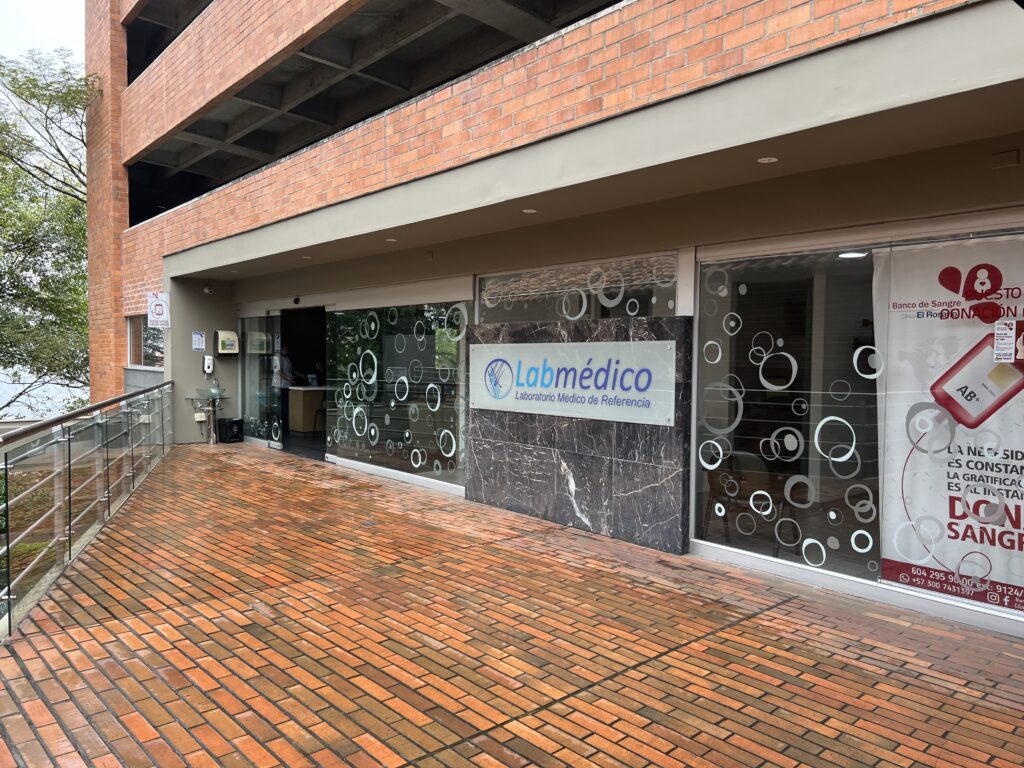
- Labmédico receipt from baby’s lab work.
- Follow-up prescriptions and orders. Mine included metabolic and hearing screening, a pediatric appointment 48–72 hours after discharge and a gynecology appointment one week after delivery. Follow your own discharge plan, and confirm which newborn samples were already taken, which results are pending and who will review them.
- Baby supplements. BioGaia drops were part of the instructions I got. That’s a historical product mention, not a recommendation for every baby. Formulations differ, so have your pediatrician confirm whether any probiotic or vitamin D product is needed, and the dose.
Current screening reminder: MinSalud expanded metabolic newborn screening in 2026, and it’s rolling out progressively. Ask which screens are done, when any remaining samples or appointments are due, and who will explain the results. Set up your baby’s and your own early follow-up before you leave, and don’t wait for a routine appointment if something needs earlier attention.
Two practical steps from my own discharge:
- Accounting. After my gynecologist and the hospital pediatrician cleared us, administration called about payment. I took the receipt back to the nurse as part of discharge. Confirm your own billing arrangements. My story isn’t a rule that emergency care can depend on advance payment.
- Lab results. The first time, I picked up my baby’s blood-type and Rh results at Clínica El Rosario two or three days after discharge. The second time, I gave Labmédico my email on our way out and got the results the next day. At the time, the office was next to Doggers on the way to the parking garage. Ask the hospital for its current collection instructions.
Blood type and registration: Registraduría’s current checklist calls for a separate blood-group/Rh exam when the supporting document is not the certificado de nacido vivo. Don’t assume everyone has to buy or collect another test for registration. Confirm what the office needs for your documents.
Add Your Baby to Health Coverage
Confirm your baby’s EPS enrollment before you leave.
- Coverage starts at birth. Under Decreto 780, newborn coverage starts at birth, normally through the mother’s EPS, and the certificado de nacido vivo can support initial enrollment.
- The three-month window. If the civil record isn’t already available to the system, or is needed to verify beneficiary status, provide it within three months. That’s separate from the one-month civil-registration deadline.
- If neither parent is affiliated: Ask the hospital enrollment team about the applicable route.
- Private insurer: Report the birth separately and confirm its own inclusion deadline.
My Recommended Pregnancy Care Team in Medellín
I truly felt like I had the A-squad care team from start to finish throughout my pregnancy in Medellín. Happy to recommend:
- Obstetrician: Dr. Juana Orrego Molina
- Doula: Susana Castro
- Hospital: Clinica El Rosario – Sede Tesoro
- Labwork/Bloodwork: Labratorio Clinico Hematologico or Laboratorio Echavarria
- Ultrasounds: MAFEM (ask for Dr. Raúl García Posada)
- Lactation Consultant: Smile House Odontología
These come from my pregnancies and the resources I collected then. Confirm current credentials, availability, location and whether they accept your exact insurance plan before booking.
Comunidad Ser Mamá is a resource I collected for pregnancy and parent support, with events and a festival that brings in family-focused providers and businesses. Check its current calendar instead of assuming the events still run on the same schedule. For after baby arrives, I’ve also put together a postpartum support guide for Medellín.
After Baby: Registro Civil, U.S. Citizenship & Colombian Passport
While I’m adjusting to all the newborn newness and enjoying the sweet snuggles, I personally prefer knocking out the rest of the paperwork as soon as I can while I’m on maternity leave. For me, after wrapping up my pregnancy in Medellín, that meant getting my child’s:
- Registro civil de nacimiento and, if your child qualifies as Colombian, a Colombian passport: my birth-registration and Colombian passport guide covers the documents, the process and what it cost me. Being born in Colombia doesn’t automatically make every child of foreign parents Colombian.
- U.S. Consular Report of Birth Abroad (CRBA), U.S. passport and Social Security number: a CRBA documents U.S. citizenship your child acquired at birth when the legal transmission requirements are met. It doesn’t grant citizenship. My CRBA, passport and SSN guide explains the separate applications and how it went for my family.
If you had any questions about my experience that I didn’t cover, please comment below!
Frequently Asked Questions About Pregnancy in Medellín
Q1: How much does it cost to have a baby in Colombia without insurance?
For my second, paying self-pay, an uncomplicated vaginal birth came to about $2,000–$2,500 USD, including the care and doula I described above. That’s not a current quote or a promise for another birth. The table has other 2022–2024 ranges, including C-section estimates from back then. With my first in the U.S. we paid $15,000, which is just our family’s bill and not a national comparison. Ask for current itemized quotes in COP, and what complications or extra stays would add.
Q2: What insurance do I need for pregnancy in Medellín?
Residents generally have to be affiliated with the Colombian health system, depending on eligibility and special-regime rules. EPS coverage and additional private coverage are different things. I used SURA Global for my third. Its current published terms say conception must come after enrollment for eligible family and collective policies, and after day 60 for a sole-insured policy, so don’t rely on my old 30-day memory. Confirm your issued wording, provider network and newborn inclusion terms. EPS medical care doesn’t have that private-policy maternity waiting period.
Q3: Can I plan for a vaginal birth in Medellín?
Yes! Talk with your care team early about your preferences, pain relief and what happens if the plan changes. My OB supported vaginal birth when it was safe for me and my babies. A C-section can be necessary and lifesaving, and that decision should come from your clinical situation and an informed conversation, not a regional percentage or an assumption about your insurance.
Q4: What hospital should I deliver at in Medellín?
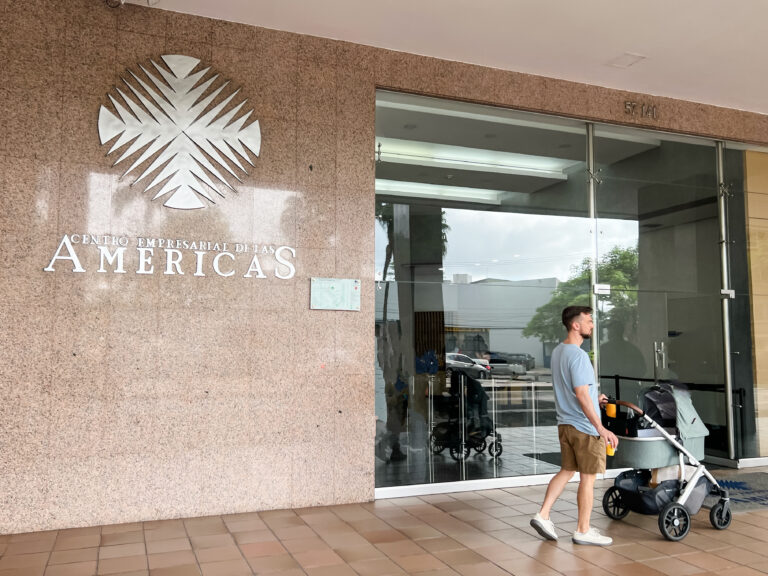
I had positive experiences delivering both of my Medellín babies at Clínica El Rosario Sede Tesoro. Clínica Las Américas and Clínica del Prado also came up in the community resources I collected, but that doesn’t confirm current maternity admissions or coverage at either one. My advice: find an OB you trust first, then ask where they have privileges, then confirm current obstetric and neonatal services, referral plans, access and insurance with the hospital. The doctor matters more than the building.
Q5: What documents do I need after giving birth in Colombia?
Before you leave the hospital, ask for the certificado de nacido vivo, the vaccination record, discharge instructions and a plan for pending results and follow-up. Finish civil registration within the month following birth. If you’re late, ask about the late-registration process instead of assuming the hospital certificate expired. My birth-registration guide has the fuller checklist.
Pro tip: If a registration rep visits, ask which office they represent. Some later procedures still need that office, but it’s not the only route for every copy. See digital and physical registro civil copy options.
Pregnancy Support and Baby Resources in Medellín
When I first moved to Colombia, I was four months pregnant with my second. Thankfully, I had some idea of the appointments I needed and what to expect after having my first in Colorado, but I still searched for resources on navigating pregnancy in Colombia. After my third baby, my second born in Medellín, I wanted to organize my notes for current and future expecting moms who are looking for support and planning to have their babies here too.
I compiled these resources from Medellín communities, word-of-mouth suggestions and my obstetrician’s recommendations. The directory and downloadable material are a historical collection, so inclusion doesn’t confirm current availability, fees, insurance contracts or qualifications. For health professionals, you can check the official ReTHUS registry and ask the provider about their relevant experience. The resource sections include:
Pregnancy support and shopping resources
Below I’ve included some clarifying notes for each section.
The Medellín Pregnancy Resource Guide
OBs, doulas, prenatal classes, baby stores, pelvic floor therapists, and more. All sourced from local moms and my own OB. The directory I wish I’d had when I was pregnant here.
Thank you!
You have successfully joined our subscriber list.
Emergency Hospitals
I’ve had positive experiences getting care for myself and my kids at the hospitals in my resource notes, and I delivered my two Medellín babies at Clínica El Rosario. That doesn’t tell you which site is right for every emergency, so ask your care team ahead of time where to go for urgent obstetric care and what referral arrangements apply. In an emergency, get assessed right away instead of waiting for your preferred doctor or paperwork.
Obstetricians
The obstetrician suggestions in my resource notes came from other families living in Medellín. Confirm professional registration, current availability and contact details directly. An Instagram account or a community recommendation is a starting point, not a credential check. If they don’t have a website, you can find their contact info via a link on their Instagram account.
Questions to consider when reaching out:
- Coverage: Do you accept my exact EPS or private policy for this service, and do I need an authorization?
- Communication: Can we discuss care and consent in a language I understand, and what interpretation support is available? Don’t assume everyone at the practice speaks English.
- Birth preferences: How do you discuss vaginal birth, induction, C-section indications, pain relief and a change of plan? Who covers if you’re away?
Doulas
If they don’t have a website, you can find their contact information via a link on their Instagram account.
Pelvic Floor Therapists
With my SURA Global policy at the time, I was eligible for ten covered pelvic-floor sessions with a fórmula. That was my benefit, not a universal SURA entitlement. Ask your current plan about the clinical referral, authorized provider, number of sessions and any copay.
Perinatal Psychologists
If they don’t have a website, you can find their contact information via a link on their Instagram account.
Prenatal Classes
My resource notes included parent classes, pregnancy support groups, newborn care, lactation support and first aid. Ser Mamá also showed up in my notes for family festivals. Ask the organizers for their current program and dates, since I haven’t confirmed a recurring 2026 schedule for every listing.
Prenatal Fitness
Ask the specific Bodytech branch about its current Pilates equipment, classes and how much pregnancy experience the instructors have. For SURA Industriales or hydrotherapy, confirm the service, referral and access rules for your exact EPS or private plan, because having a SURA policy alone doesn’t guarantee access. Run any exercise plan by your care team.
Prenatal Massages
FYI, I was hard-pressed to find a masseuse with a pregnancy pillow that let me lie face down. That was my search experience, not a recommendation for a particular position. Ask your care team about massage for your situation, and confirm the therapist’s prenatal training, positioning and current services. Aqua Aura was in my notes for home visits, so check whether they still offer that.
Maternity Clothing
My notes included limited maternity wear at stores like Éxito, Pepe Ganga and El Mundo de Laura, along with dedicated maternity clothing options. Inventory changes, so check the store or its current contact details before you make the trip.
Baby Stores – New
Éxito is like a Colombian Walmart, and Falabella is comparable to Macy’s in the USA. I always recommend looking at their online inventory if you can’t find what you need in-store. There are a lot of quality, cute Colombian brands listed as well.
Baby Stores – Used
Thrift stores like Goodwill are not common in Colombia, but these accounts are great for finding second-hand baby goods, with occasional new items as well. If you’re looking for something specific and don’t see it on their social media, I suggest sending them a message directly via WhatsApp or Instagram to check availability. Sometimes they might even put out a call to their followers asking if anyone is looking to sell what you need. If there’s no website, their contact information can be found via a link on their Instagram account.
Baby Furniture
My furniture notes include cribs, floor beds and custom-made options, with stores like Pepe Ganga as extra places to check inventory. These are shopping leads, not a statement that every product is safe for a newborn. Ask about the intended age and safety specifications, and talk to your care team about safe infant sleep.
Looking for something specific?
I’d love to make this guide more inclusive, and I’m looking for recommendations for expecting moms interested in more holistic, home birth experiences. If there’s something you think I’m missing, leave a comment below and I’ll see what I can find to add next time!
Official Sources for the Current Guidance
Reviewed October 24, 2026:
- Colombia’s health-system rules
- SURA Global’s published policy wording
- Ley 2244 maternity rights
- MinSalud pregnancy vaccines
- Newborn screening and discharge framework
- 2026 screening expansion
- WHO’s C-section guidance
- Registraduría’s birth-registration checklist
Confirm your own policy, care plan and documents with the relevant team.


Leave a Reply