
This post may contain affiliate links. Read my full disclosure here.
Congratulations on your growing family! If your child was born in Colombia and has a U.S. citizen parent, start by checking whether they acquired U.S. citizenship at birth. Having a U.S. citizen parent alone does not settle that question. A Consular Report of Birth Abroad (CRBA) documents citizenship acquired at birth; the application does not grant it. You’ll also need your child’s registro civil de nacimiento (birth certificate). If you haven’t done that yet, here’s my step-by-step guide to registering your baby’s birth in Colombia.
This guide follows our CRBA, first U.S. passport and Social Security number applications, with links to the current official instructions for each step.
This process can be overwhelming, especially for new parents. Here’s what helped us get organized and what to check before planning your own appointments.
For context, both my partner and I are U.S. citizens, and we attended the in-person interview together. We needed both the CRBA and a U.S. passport, so we requested a CRBA appointment that included the passport application. Our experience does not cover every custody or absent-parent situation; I’ve linked the official instructions below for those cases.
Regarding planning logistics, I booked our airfare and hotel immediately after receiving confirmation of the appointment via email from the Consular office after submitting my application. It was just going to be my daughter, her dad, and myself, focusing solely on the interview rather than making a family trip with our other two kids. Our nanny and my mother-in-law helping at home with them made this possible. Booking directly with the airline was cheaper, and we saved $30 using American Express rewards points for the hotel. Both times we’ve visited the U.S. Consular Agency in Barranquilla, we’ve stayed at the ESTELAR en Alto Prado Hotel, just a three-minute walk away.
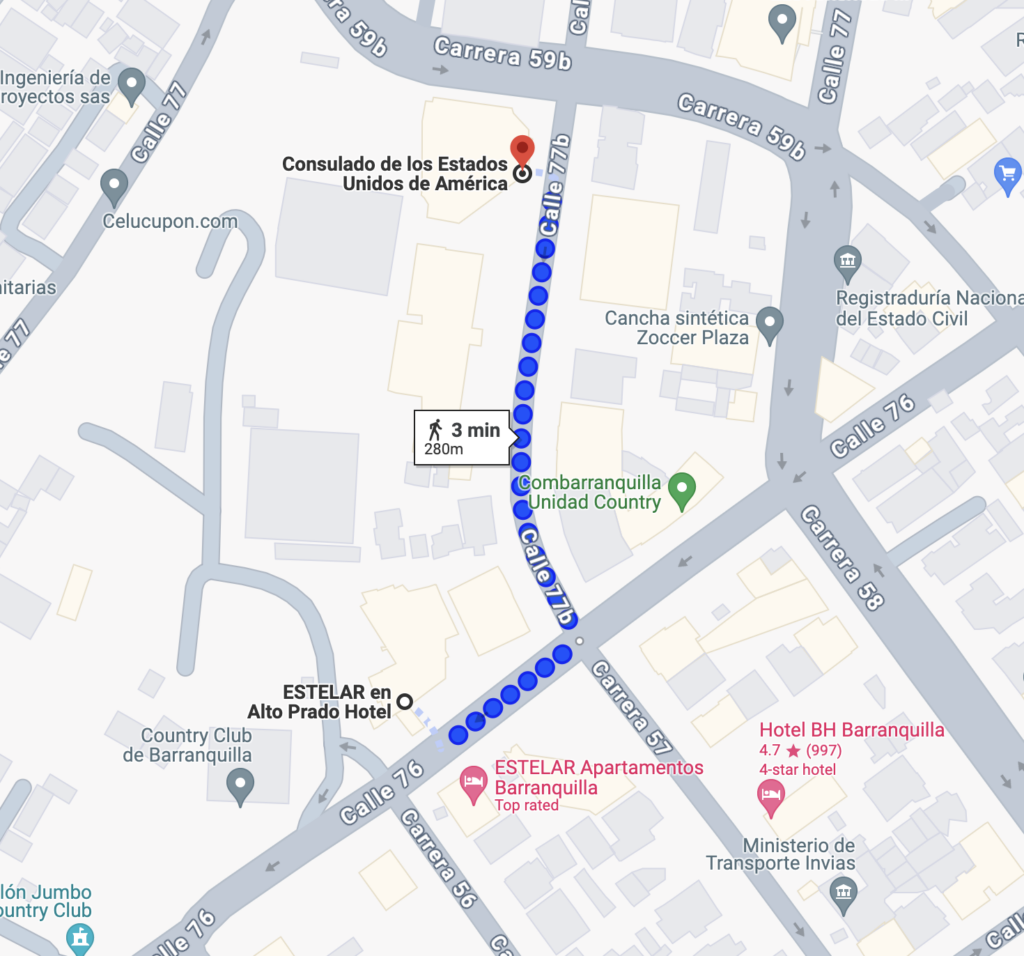
We arrived the night before. If you’re planning a quick trip, leave room for delays rather than assuming our appointment timing will apply to yours. Our appointment was at 8:30am, we were done by 10:15am, and our flight took off at 4:15pm. It was perfect timing to rest at the hotel after the appointment, pack, get to the airport and enjoy lunch at the Macondo Lounge which won an honorable mention in ‘Lounge of the Year’ category. For packing, we brought one personal item, one carry-on suitcase, and our Uppababy Vista with the bassinet for the baby to sleep in overnight.
Official-source review: October 24, 2026. My trip, interview, photos and cost breakdown describe the experience I originally shared in 2024. Current instructions are linked below; use your appointment confirmation and the U.S. Embassy’s guidance when preparing your own application.
How to Apply for a CRBA in Colombia
CRBA Eligibility: Who Qualifies for U.S. Citizenship
A CRBA is available for an eligible child under 18 who acquired U.S. citizenship at birth abroad. The rules depend on the parents’ citizenship, marital status, residence or physical presence before the birth, parentage and the child’s birth date. See the State Department’s CRBA overview.
For a child born to two married U.S. citizen parents, at least one parent must have resided in the U.S. or its territories before the birth. For a child born on or after November 14, 1986 to a married U.S. citizen and foreign-citizen parent, the U.S. citizen generally needs five years of physical presence before the birth, including two after age 14. Parentage requirements also apply. Unmarried-parent cases have different rules, so use the State Department’s full citizenship-at-birth requirements for your family’s situation.
I’d review the eligibility rules before paying an application fee. If your child did not acquire citizenship at birth—for example, if the relevant parent became a U.S. citizen later—the CRBA route does not apply. The Child Citizenship Act guidance explains a separate route and its conditions; a parent’s later naturalization alone is not enough.
CRBA Application Process: Step-by-Step
The Embassy lists these questions for using its online eCRBA process. Answering “yes” is not a substitute for meeting the citizenship requirements above:
- Was the child born in Colombia or Venezuela?
- Is the child under 18?
- Was at least one parent a U.S. citizen or U.S. non-citizen national at the time of the child’s birth?
- Can you pay online using an internationally accepted credit/debit card or ACH from a U.S. dollar-denominated bank account?
CRBA Application Process
- Start from the Embassy’s CRBA page, complete the online application and upload the supporting documents.
- Pay the US$100 CRBA fee online. Do not pay that fee again at the appointment.
- Use the Embassy’s linked appointment-request process after submission. The office may ask for more documents before confirming your appointment.
- If you also need the first passport, request the combined CRBA appointment. A passport-only appointment does not cover a CRBA application.
Head over to the Consular Report of Birth Abroad on the U.S. Embassy’s website to find the information you need including the link to start your application. It highlights eligibility requirements, what required documents are needed, and other FAQs like if only one parent can attend. It’s quite common to apply for the CRBA and passport at the same time so that information is also available.
How to Get a U.S. Passport for Your Child in Colombia
Passport Application Process
When applying alongside your CRBA:
- Complete and print Form DS-11 single-sided. Leave it unsigned until instructed.
- If your child has been issued an SSN, provide it on DS-11. If they have never been issued one, enter zeros and include a signed, dated no-SSN statement using the State Department’s required wording for a child without an SSN.
- Bring one color 2×2-inch photo taken within the last six months and printed on photo-quality paper. Use a plain white or off-white background; show the baby’s full face with no other person in the photo. A baby’s eyes do not need to be entirely open. A white sheet can help at home. Follow the current photo requirements.
- The State Department Photo Tool crops a photo; it does not approve it or check its quality. Do not digitally remove or change the background.
- For a child under 16, current passport fees total US$135 for the book or US$150 for the book and card, including the US$35 acceptance fee. Passport fees are separate from courier charges. See the payment options below.
- The passport card cannot be used for international air travel. For a flight between Colombia and the U.S., your child needs the U.S. passport book; the card is optional. If your child is also Colombian, see the dual-nationality and Colombia exit-permission guidance below.
Paying for your child’s passport
The Embassy-linked passport wizard confirms that adult and minor DS-11 applicants can pay online through Pay.gov. Bring the payment confirmation to your appointment. This pays the passport application fee; it does not submit the DS-11 application or book your interview.
For payment at the appointment, the Embassy’s payment instructions list cash in U.S. dollars or Colombian pesos, credit cards, and U.S. debit cards in Bogotá or Barranquilla. Checks, money orders and Colombian debit cards are not accepted for the passport fee. The cardholder must be present, and there is no ATM on site. Follow your appointment instructions if they give you more specific directions.
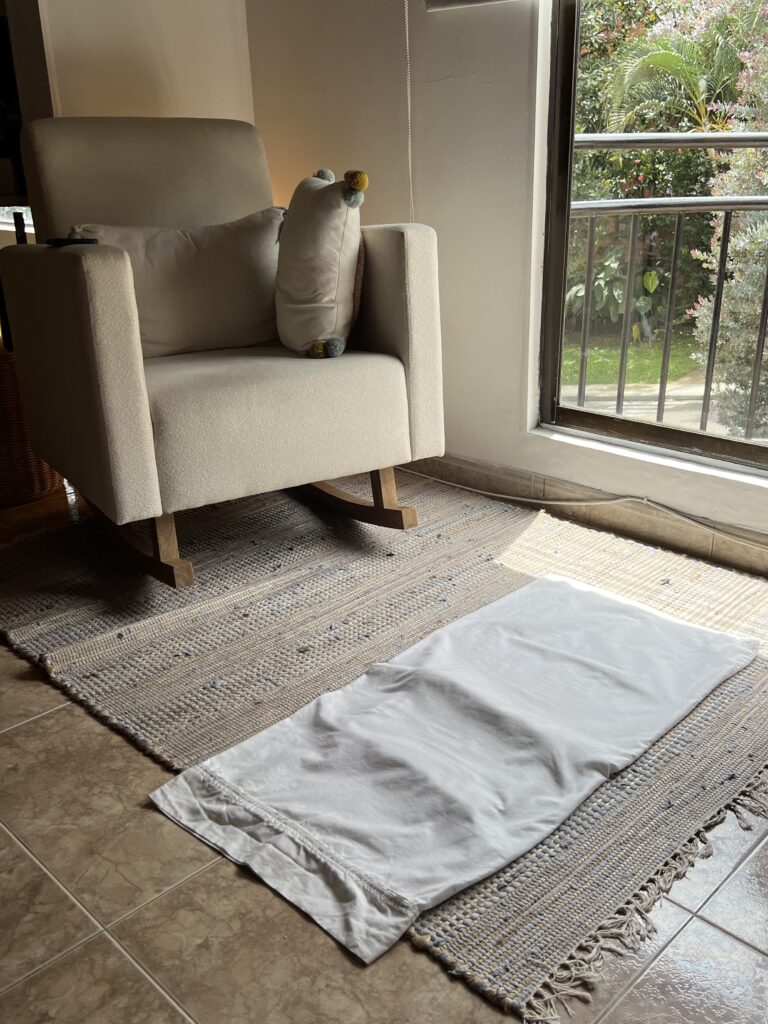
Here’s how I took my daughter’s photo for our 2024 application. After capturing a few shots, I used the State Department’s photo tool and saved the best two. I also made versions with the background removed using Remove BG or Canva. Of the four photos I brought, the one with the background removed was selected. That is what happened at our appointment, but it is not advice to follow now: current State Department rules require an original, unedited photo.
I sent the photos via WhatsApp with printing instructions (2×2 inches, color photos) to Auros near the cash registers at Éxito Viva Envigado. I paid via Bancolombia transferencia and picked them up later that afternoon.
Bogotá vs. Barranquilla: Choosing Your Appointment Location
You can request a CRBA and passport appointment at the U.S. Embassy in Bogotá or the U.S. Consular Agency in Barranquilla. We’ve done it in Barranquilla both times. For our trip, staying near the office made the morning easier.
The Embassy currently lists Bogotá CRBA + passport appointments on Monday–Thursday mornings, except the last Thursday of the month, and Barranquilla appointments in the mornings. Availability controls the appointment offered; don’t assume one location will always have a shorter wait.
What to Expect at the CRBA and Passport Interview
After our hotel breakfast, we walked to the Centro Empresarial Las Américas for our 8:30am appointment. The front desk confirmed our appointment before letting us into the elevator to the 5th floor. Once outside the office, another guard let us into the waiting room.
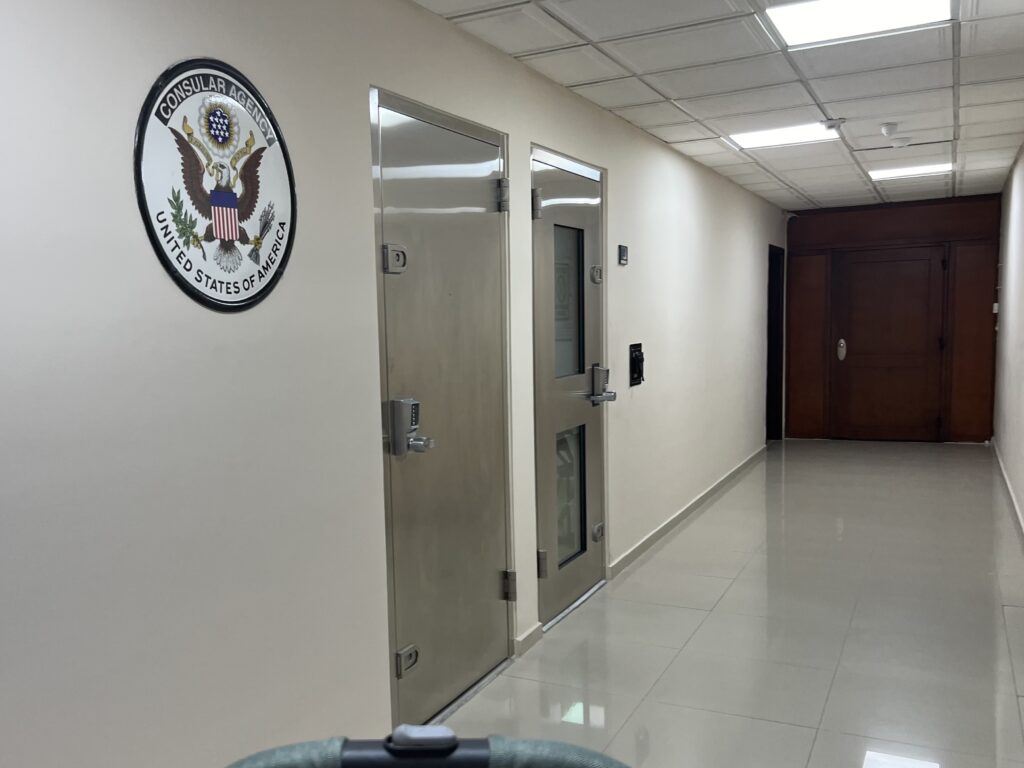
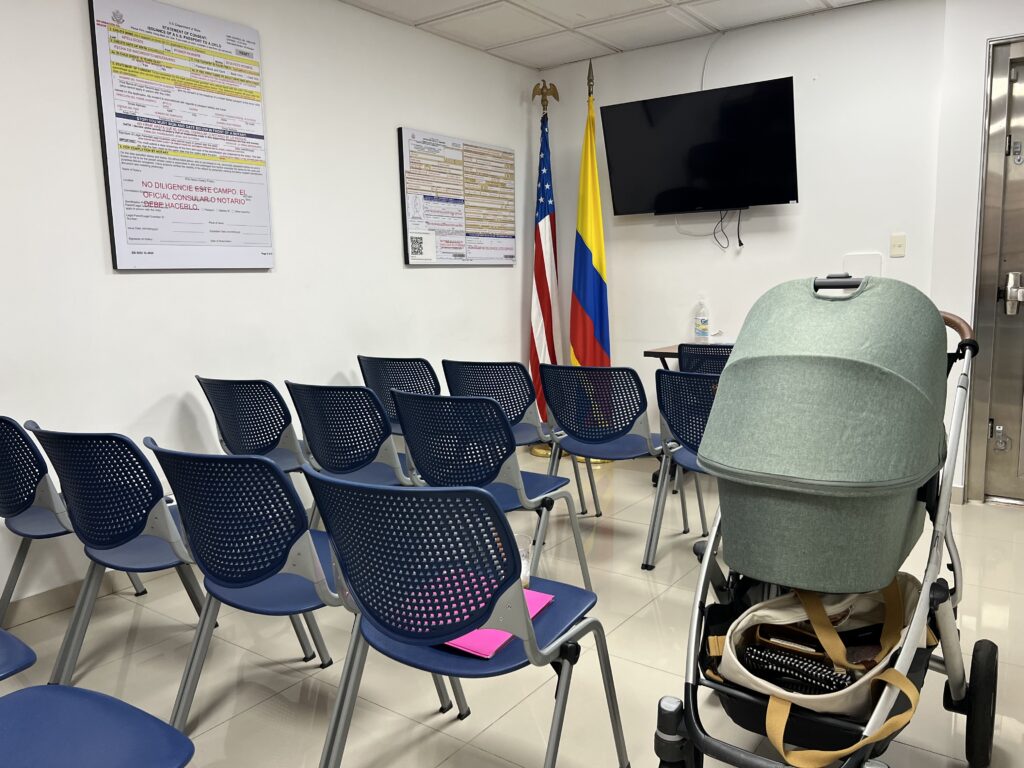
Once inside, the guard gave us an empty folder for the documents we had brought and passed it to the processing agent. After about 10 minutes, the agent called us with a few questions, including where we wanted the documents mailed. We received a slip to take to the DHL office next door for prepaid mailing labels—one for my daughter’s passport book and card, and the other for her CRBA. At the time, I was told to expect about six weeks to process them. The agent asked me to return in 45 minutes with the labels, in time for the interview.
The DHL office was right next door. The whole process took about 15 minutes, including the walk over, leaving us enough time to grab a snack and drink at Tostao by the Consular building entrance. We gave the DHL representative the agent’s slip, and for 45,000 COP she processed and printed the labels. That was our 2024 arrangement and price; follow your appointment’s current delivery instructions.
Current passport delivery: the Embassy’s delivery instructions say the passport or passport-card delivery fee is additional to the passport fee. Pay the DHL representative by debit or credit card on your appointment day—at the Embassy in Bogotá or next door to the Consular Agency in Barranquilla. The page describes delivery to your requested address. It does not give a current courier price or say how many labels a combined CRBA/passport application needs, so confirm those details for your appointment. My 45,000 COP and two-label arrangement above are from our trip.
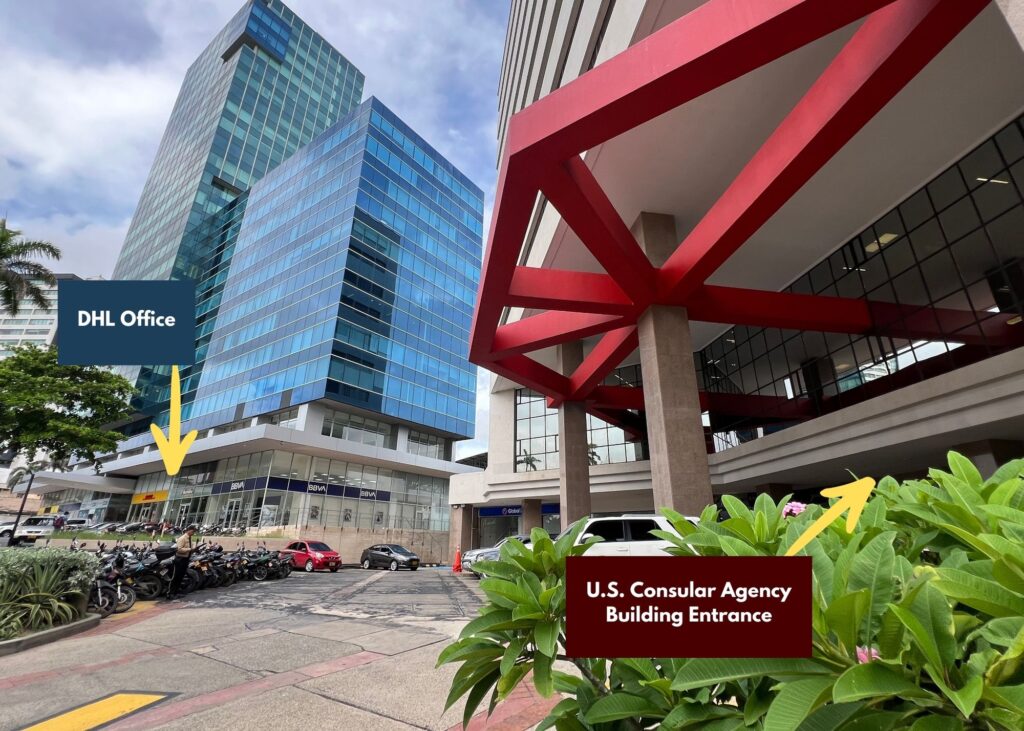
We returned to the Consular office five minutes before we were due and gave the agent our prepaid shipping labels. After a 5-10 minute wait, both my partner and I were called for the interview. The agent asked questions to confirm the accuracy of our information, such as when we moved to Colombia, if we were raised in the United States, which Colombian visa my partner had, and whether we had other children. She verified my online passport payment, had us sign a few documents, and then returned our physical items (passports) and original copies (marriage certificate, registro civil de nacimiento). And that was it!
How to Get a Social Security Number for a Child Born in Colombia
Can You Get a Social Security Number From Colombia?
Yes. The Social Security Administration lists Santo Domingo’s Federal Benefits Unit (FBU) as the office serving Colombia. Contact FBU.Santo.Domingo@ssa.gov for current submission, document and return instructions. Check with them before mailing originals or planning a trip to the Dominican Republic.
I wasn’t comfortable mailing original documents like my daughter’s CRBA and passport internationally, so I waited until a trip to the U.S. to handle it in person at a Social Security office. That worked for us. If you’re planning to do the same, arrange an appointment under SSA’s current instructions instead of relying on my old walk-in experience.
If tax season is approaching, check the IRS guidance for parents waiting for a child’s SSN. It explains dependent claims, filing extensions and credit deadlines. Getting an SSN does not by itself establish eligibility for a tax credit, and an extension to file does not extend the deadline to pay tax owed.
Social Security Application Process
Choose the application route that fits where you’ll be, and follow that office’s instructions:
- Applying while in the United States: Start with SSA’s first-number application page and arrange an office appointment to show your documents. SSA’s current instructions say to complete an application started online at an office or card center within 45 calendar days.
- Applying from Colombia: Ask the Santo Domingo FBU how to submit your child’s application. You do not need to assume an international trip is required.
- Outreach visits: If the Embassy or FBU announces a visit to Colombia, follow that announcement’s booking and document instructions. There is no regular visit schedule promised here. STEP remains a useful source of Embassy alerts.
There is no fee for a Social Security number and card. The SSN application is separate from the CRBA and passport applications.
I preferred in-person options only because I did not feel comfortable mailing the required documents to the U.S. Embassy in the Dominican Republic. Ultimately I went with the first option and went to the social security office in the United States. About a week before my trip I applied online.
SSN Interview: What to Bring and What to Expect
Social Security In-Person Interview
At our visit, someone checked me in, and I waited about an hour for my child’s name to be called. I provided the documents and received a confirmation paper. Her Social Security card arrived at my U.S. address within two weeks. That was our timeline. SSA currently estimates 5–10 business days after approval for mailing the card; that is not a promise from the appointment date or a Colombia delivery estimate.
For current documents, use SSA’s original-card requirements for a foreign-born U.S.-citizen child. You’ll need evidence of the child’s citizenship, age and identity, plus your identity and relationship or responsibility. Include the foreign birth certificate if you have it or can obtain it within ten days. SSA accepts originals or copies certified by the issuing agency, not ordinary photocopies or notarized copies. Anyone age 12 or older applying for a first SSN must attend an interview.
Processing Times and What to Expect After Your Appointment
Treat processing estimates separately from the time it takes to get an appointment. Your confirmation and the consular office’s current instructions are the best guide to your own case.
- Passport: official estimates differ by page and location. The Embassy’s detailed delivery instructions allow 4–6 weeks after approval for printing and arrival at the Embassy, followed by DHL delivery. The Barranquilla agency page lists 6–8 weeks for regular passports. Confirm the estimate for your appointment; don’t treat either as a guaranteed doorstep date.
- CRBA: ask the consular office for the current estimate for your application. I was quoted about six weeks at our appointment; that historical quote is not a current guarantee.
- Delivery: we arranged separate DHL shipments for the passport documents and CRBA. Confirm the current CRBA shipping arrangement, courier charge and number of labels for your case.
For passport tracking, use the State Department status page linked by the Embassy. For case questions, use the Embassy’s ACS contact form. A CRBA is not a travel document; arrange your child’s U.S. passport before international travel to the U.S.
Before your child flies, also review which passports to carry and Colombia’s exit-permission requirements. Having a U.S. passport does not replace the Colombian documents or permissions that apply to the trip.
Documents I Brought: CRBA, Passport and SSN
Here’s the list I originally shared in 2024 of what I brought to our appointments. I grouped documents in protective sheet covers to keep everything separate but organized in one folder. These are our documents, not a complete checklist for every family. Use the Embassy’s current requirements and CRBA checklist alongside your appointment email; the two notarized birth-certificate copies below are what I brought, not a universal two-copy rule.
CRBA: my 2024 document list
- Printed checklist from the Embassy (see the current CRBA checklist)
- Email confirmation of application submission and payment and case number
- Completed (but not signed) Form DS-2029
- Child’s birth certificate (registro civil de nacimiento; original and two notarized copies)
- Proof of identity and citizenship (passport; physical copy and two copies) for both parents
- Proof of physical presence in the USA that was entered in the online application (i.e. tax returns, W2s, passport stamps)
- U.S. marriage certificate (original and copy)
- Colombia Migration Reports, or Certificado de Movimientos Migratorios, for each parent (included in my document list). That is done through Migración Colombia here.
- Proof of relationship and child, such as family photos from social media posts or holiday cards that have timestamps when posted, and prenatal records.
- A way to cover any unpaid consular fees. Follow current payment instructions; do not pay the online CRBA fee twice.
U.S. passport: what I brought
- Completed but unsigned DS-11 form
- One 2×2-inch passport photo
- My Pay.gov payment confirmation
Online payment was part of my experience, and the Embassy’s current passport wizard also tells DS-11 applicants who pay online to bring their payment confirmation. Use the DS-11 Pay.gov page for a first passport or child-under-16 application abroad, rather than the separate DS-82 renewal-payment form.
Social Security number: what I brought
- Original and copy of the Consular Report of Birth Abroad
- Parent’s ID (U.S. passport) and a copy. I brought my physical passport and a copy along with a copy of my partner’s passport.
- Child’s non-expired U.S. passport and a copy
- Printed confirmation of the online SS-5 application
Our 2024 CRBA, Passport and Travel Costs
These are the expenses from our 2024 trip from Medellín to Barranquilla. They are not a current travel or courier quote. The SSN and card are free; any travel for that application is separate.
| Item | Cost (USD) |
|---|---|
| CRBA Application Fee | $100 |
| Passport Book & Passport Card | $150 |
| Airfare | ~$350 |
| Hotel ($93 Chase Points) | $0 |
| Transport to/from Airport in Medellin | ~$55 |
| Transport to/from Airport in Barranquilla | ~$25 |
| DHL Prepaid Shipping Labels | ~$15 |
| Total: | $695.00 USD |
Official Links and Resources for U.S. Citizens in Colombia
These are the official links that have been mentioned throughout this post and shared here for ease of reference:
CRBA, U.S. passports and Embassy services
- Colombia CRBA application and appointment instructions
- Embassy CRBA checklist
- Citizenship-at-birth requirements
- Passport requirements for children under 16 and parental consent
- Passport forms, including DS-11 and DS-3053
- Passport photo requirements
- Current passport fees
- Embassy passport, payment and processing information
- STEP Embassy alerts
- Embassy-linked passport wizard: DS-11 online payment and receipt instructions
- Embassy DS-11 page: local payment methods and passport delivery
- Pay.gov: overseas DS-11 passport application fee
- State Department: dual nationality and U.S. passport use
- State Department: passport application when a child has no SSN
Social Security
- Apply for a first Social Security number
- SSA original-card document requirements
- SSA international offices: Colombia is served by Santo Domingo
Colombia travel, exit permissions and consular help
- Migración Colombia: children’s exit requirements and permission forms
- Cancillería: residence-abroad certificate and custodial-parent exception
- Migración Colombia: special-case travel FAQs
- ICBF: exit permissions, custody and family-judge procedures
- ICBF: ongoing permission by escritura pública
- Article 110: parental authority and residence-abroad exceptions
- Law 2097, Article 6: REDAM consequences
- SNR: 2026 Colombian notarial tariff guidance
- Cancillería: 2026 consular deed, copy and certification rates
- ICBF: revoking permanent exit permission
- Migración Colombia: official PQRS filing and consultation channel
- Migración Colombia: PQRSDF filing receipts and follow-up instructions
- Migración: published 2012 instruction on urgent recording of minor exit restrictions
- ICBF: protection guidance and 24-hour Línea 141
- Tribunal Superior de Medellín: 2024 decision quoting the parent lifting checklist (paragraph 44)
- Law 1755 of 2015: petition-response deadlines and procedure
- Constitutional Court T-469/25: general petition-response period in business days
- Cancillería: consular exit-permission signing and foreign-parent passport
- Colombian consulate in Berlin: electronically delivered permission printed for travel
- Frankfurt consular instructions: verification code presented at departure
- New Delhi consular instructions: official document-verification portal (page 3)
- Cancillería: CIAC citizen-support channels
- Cancillería staff guide: permission corrections, replacement and verification codes (July 2024)
- Miami consulate: 2026 exit-permission fee per signature
Apostilles, legalization and translations
- Cancillería: apostilles for foreign documents
- Cancillería: legalization of foreign documents
- Cancillería: official translations for use in Colombia
- Resolution 1959 of 2020: foreign-document legalization chains (Articles 9–11)
- Circular 112 of 2021: apostilled documents and official translators
- Law 962 of 2005, Article 33: translator qualifications and existing licences
- Universidad de Antioquia: verification of translators it certified
U.S. Embassy Information
Use the Embassy’s CRBA page to request Bogotá or Barranquilla, and follow the address and arrival instructions in your appointment confirmation. For questions, use the ACS contact form. For Social Security, contact the Santo Domingo FBU listed by SSA.
FAQ Section
Can I apply for a CRBA and U.S. passport at the same time in Colombia?
Yes. Start with a CRBA application and request the combined appointment through the Embassy’s CRBA process. A passport-only booking does not cover a CRBA. Fees are separate: US$100 for the CRBA; for a child under 16, US$135 for the passport book or US$150 for book and card. The card does not replace the book for international flights.
How long does it take to get a CRBA in Colombia?
Ask the consular office for your CRBA estimate. I was told about six weeks at our appointment, which is my historical experience. Passport estimates vary: the Embassy’s detailed page lists 4–6 weeks after approval to print and return the passport to the Embassy, before DHL delivery; the Barranquilla page lists 6–8 weeks for regular passports. Confirm your case’s timing before making travel plans.
Do both parents need to attend the CRBA interview in Colombia?
The child must attend, and both parents should attend. If a parent cannot be there, check the Embassy’s CRBA instructions for your family’s situation. For an under-16 passport, State’s parental-consent rules generally call for the absent custodial parent’s notarized DS-3053 and a copy of the ID used, or applicable sole-authority evidence. Submit DS-3053 and other notarized consent statements within 90 days after signing or notarization. Check the Embassy’s instructions for where the absent parent may notarize the consent. DS-5507 addresses parentage, physical presence and support; it is not a substitute for passport consent. Our interview included both parents, so the absent-parent route is not part of my experience.
That passport consent is separate from Colombia’s permission for a child to leave the country. Check both before planning international travel with only one parent.
Can I get a Social Security number for my child from Colombia?
Yes. Contact Santo Domingo FBU, the SSA office serving Colombia, for current application instructions before mailing documents. If applying during a U.S. trip, use SSA’s first-number process and arrange an appointment. Any Colombia outreach visit should be treated as an announced opportunity, not a guaranteed recurring service.
What documents do I need for a CRBA appointment in Colombia?
Use the Embassy’s CRBA checklist and your appointment email for the required originals, copies and evidence for your case. They cover the Colombian birth record, parents’ identity and citizenship, qualifying residence or physical presence, and family or relationship documents. My document list above records what I brought; it does not replace those instructions.
Before You Travel: Passports and Colombia Exit Permission
Getting the documents is a big step. Before booking an international trip, check which passports your child needs and who will travel with them. The guidance below was reviewed against official sources on October 24, 2026; it is separate from my Barranquilla appointment story.
Travel details: Exit permission · Repeated trips · Exit restrictions · Overseas documents · Printed/digital copies · Corrections and fees
Which passport does a U.S.–Colombian child use?
For flights between Colombia and the U.S., plan to carry both valid passport books. Use the Colombian passport for Colombia’s entry and exit controls and the U.S. passport for U.S. entry and departure. The State Department’s Colombia guidance recommends traveling with both. Its dual-nationality guidance confirms that the U.S. passport requirement includes children. A CRBA or passport card does not replace the book for international flights.
If your child’s Colombian documents are missing or expired, check with Migración Colombia before traveling. Its dual-national minor FAQ describes an exit exception using valid documents of the other nationality when all remaining requirements are met. That does not remove the child’s Colombian status or any required exit permission.
When does Colombia require an exit permission?
For a Colombian child under 18, including a dual national, Migración Colombia’s exit instructions generally require permission from each parent who is not traveling:
- Both parents traveling: the absent-parent permission normally does not apply; bring the child’s travel documents and a legible copy or image of their registro civil.
- One parent traveling: obtain the other parent’s authenticated permission unless a documented exception applies.
- Traveling alone or with another adult: permission is generally needed from both parents, subject to the applicable exceptions.
The permission needs the destination, purpose, departure and return dates, and the accompanying person’s details. In Colombia, authenticate it before a notary. For a parent abroad:
- At a Colombian consulate: Cancillería’s exit-permission checklist specifically requires a valid passport from a foreign parent, plus a copy of the child’s birth record and the travel details. Follow the consulate’s appointment and signing instructions.
- Before a foreign notary: where no nearby Colombian consulate is available, Migración describes a permission completed in Spanish, signed before a notary, apostilled and presented in original. For a permission issued on paper, arrange delivery of the original; an emailed scan does not replace it. If the document comes from a non-Apostille-Convention country, confirm the applicable legalization route with the consulate and Migración before arranging it.
Use the official page’s forms and instructions for your situation. The overseas authentication guidance below explains where apostilles come from and how translations are handled.
Passport consent is a different document: the DS-3053 used for a U.S. passport does not replace Colombia’s exit permission.
Does custody remove the need for permission?
Custody (custodia) is different from parental authority (patria potestad). ICBF explains that custody alone does not remove the other parent’s consent requirement. Under Article 110, consent is not required from a parent whose patria potestad has been suspended or removed. Bring the final, enforceable court decision; do not assume a foreign order is automatically recognized in Colombia.
A separate exception applies when a child has habitually lived abroad for at least one year and is returning to that residence with the custodial parent. Article 110 requires a consular residence certificate or consular registration, plus custody evidence. Cancillería’s certificate instructions specify custody issued or recognized by Colombian authorities. ICBF also lists an authentic copy of the birth record. Traveling with the other parent or another adult requires the custodial parent’s permission and the applicable supporting documents; living abroad by itself is not enough.
Can an escritura pública cover repeated trips?
Yes: a general or permanent authorization by escritura pública is a way to give consent for repeated travel. It is not an exemption from consent. ICBF explains that you can request a constancia de vigencia from the issuing notary, rather than make a new deed for every trip. This confirms the authorization remains in force.
Check the paperwork before each departure. Migración’s main instructions give an initial three-month period, then require a validity certificate no more than one month old. Its detailed FAQ instead says 30 business days and identifies the issuing notary or Colombian consulate as the source of the note. Because those windows differ, confirm the required recency and document format with the issuer and Migración before relying on the deed.
How do you arrange the escritura?
Start with a notary in Colombia or a Colombian consulate abroad and ask specifically for a permiso permanente de salida de menor por escritura pública. Cancillería lists this as a consular service. Request that office’s checklist, draft requirements and signing arrangements before making the trip.
Have the authorizing parent’s identity document, the child’s Colombian registro civil and the intended companion’s identification ready. Some offices ask you to send a minuta (draft text) for review before assigning a signing appointment; Berna’s official instructions show that process. Follow your own office’s requirements for originals, copies and how recently documents must have been issued. Check that the final wording covers the intended travel and companions, then obtain the deed copy and validity evidence needed for departure.
What should you budget for?
In Colombia: the SNR’s 2026 tariff notice lists COP 90,600 for acts without a monetary value, before IVA, notarial paper and copies. This is a tariff reference, not a confirmed total for your permission. Ask the notary to confirm the applicable charge and provide an itemized amount, including any separate copy or vigencia costs.
At a Colombian consulate: fees follow a different schedule. For the U.S. and other locations in the “rest of the world” category, Resolution 03969 of 2026, Articles 6–7, lists USD 184 for protocolization, USD 18 for a copy and USD 34 for a certification. These are separate fee components, not an all-inclusive quote. Confirm additional notarial charges, payment method and any local-currency conversion with your consulate. Euro-zone and Cuba rates differ. Budget for later validity certificates too.
Can permanent permission be revoked?
Yes. ICBF says an indefinite permission can be revoked by escritura pública at the same notary. Ask that office for the revocation requirements and fees; if a consulate issued the original, contact it for the applicable procedure. “Permanent” does not mean irrevocable.
Follow up on the notification separately. The official pages reviewed here do not establish an automatic notary-to-Migración notification process. Ask the issuing office what it has recorded or communicated, and ask Migración what it needs to record your request. Keep the revocation document and any filing references available. These are practical follow-up steps; the sources do not provide a universal notification deadline or guarantee an immediate migration alert.
How do you request an impedimento de salida?
For a parent-requested restriction concerning a Colombian child or a foreign child resident in Colombia, Migración’s filing FAQ and ICBF’s guidance describe these steps:
- Prepare a signed letter. Explain the reasons for the request and include your contact and location details.
- Attach the supporting identity documents. Include the child’s registro civil and both sides of the requesting parent’s Colombian cédula, or the parent’s identification document if foreign. If you have revoked an escritura, ask Migración how to submit that supporting document too.
- File with Migración. The listed routes are a Centro Facilitador de Servicios Migratorios, a migration control post with extranjería functions, or the online PQRS channel. Use the official Centro de Consulta Ciudadana for online filing.
- Keep the radicado and follow up. Migración’s PQRSDF instructions explain the receipt and “Mis Casos” tracking. Ask for confirmation of the action taken; a submission receipt alone does not confirm that a restriction is active.
What if the situation is urgent?
If a child may be taken out of Colombia imminently: contact Migración directly through a Centro Facilitador or migration control post, explain the urgency and have the signed request and supporting documents ready. Migración’s published Directiva 11 of 2012, section 6.3, instructs urgent handling and immediate database entry for parental or administrative restrictions received at those offices. This older instruction concerns recording a restriction; it does not establish an instant online service or a deadline for lifting one. Confirm current handling with the office and ask for confirmation of the action taken.
If the child needs immediate protection, ICBF’s free national Línea 141 operates 24 hours a day for protection, emergencies and guidance in Colombia. Contacting that line is a protection step; continue the required Migración filing and follow-up.
If the child needs urgent medical travel abroad: ICBF lists this among the situations in which the Defensor de Familia can grant permission de plano. Contact ICBF about that procedure and disclose any existing restriction. The published guidance does not say that a medical need automatically clears an impedimento.
How can an impedimento de salida be lifted?
First establish who requested or ordered it. The route depends on the type of restriction:
- A parent’s personal restriction: Migración’s FAQ says the parent who requested it can lift it. The document guidance below applies to a parent’s lifting request. Its FAQ also says a later valid permission from that same parent takes precedence over their earlier impedimento when the other exit requirements are met; their later registered impedimento takes precedence over an earlier permission.
- A judicial restriction: obtain the appropriate decision from the competent judicial authority. Migración directs questions about judicial impedimentos and precautionary measures to the Policía Nacional, which communicates the official record to Migración. Migración cannot independently change or certify that judicial information.
- An administrative child-protection measure: contact the authority responsible for the case. Article 103 of the Childhood Code allows the competent administrative authority to modify protection measures when the circumstances that led to them have demonstrably changed. A parent’s new permission does not itself replace that decision.
What documents support a parent’s lifting request?
A November 2024 Medellín court decision (paragraph 44) reproduces the parent-request checklist from a 2019 interagency agreement:
- Include your child’s full name and identification, an explicit request to lift the impedimento, and your telephone number and address.
- Attach the requesting parent’s cédula and the child’s registro civil to establish parentage.
- In Colombia, present the request personally before Migración Colombia or have it authenticated by a notary.
- Abroad, present it personally before a Colombian consulate, or use a local notary with the apostille or legalization that applies.
This is a documented checklist for a parent’s request, not a universal bundle for judicial or child-protection measures. Confirm the current submission route and accepted document formats with Migración. The cited checklist predates this guide’s review; it does not establish a document-expiry period or require a newly issued registro civil.
If you are a foreign parent: Migración’s initial impedimento-filing FAQ accepts the foreign parent’s identification document but does not specify which types. The dated lifting checklist above says “cédula” without explaining the foreign-parent alternative. Ask Migración which ID and copy format it accepts for your lifting request. The valid-passport rule for signing an exit permission at a consulate is specific to that service; it does not establish that a passport or cédula de extranjería is automatically sufficient for every lifting request.
How long does lifting a restriction take?
The official sources reviewed do not give a guaranteed time for removing the restriction from the record or clearing travel. Colombia’s general petition-response period is 15 business days, unless a special legal period applies. Law 1755 of 2015 (Articles 14, 17 and 21) provides different periods for some request types and rules for incomplete requests, transfers to the competent authority and exceptional extensions. A response deadline is not a promise that the lifting request will be approved or the record cleared within that period.
Keep your filing reference and supporting permission or authority decision. Ask which deadline applies and what has been communicated and recorded, and confirm the outcome before relying on it for travel. A filing receipt or an upcoming flight alone does not establish clearance.
How do overseas authentication and translation work?
If you use the Colombian-consulate route, follow that office’s signing and document-delivery instructions. For documents authenticated by a foreign notary, check the country of origin.
Apostille route: the competent authority in the country that issued the document supplies the apostille when the Hague Apostille Convention applies. Colombian Cancillería does not issue that foreign apostille. Its Circular 112 of 2021 confirms that a properly apostilled foreign document does not also need certification or legalization by Colombian Cancillería. Any required translation and the receiving office’s substantive requirements still apply.
Legalization route: for foreign documents from countries outside that Convention, Resolution 1959 of 2020, Article 9, sets out this sequence:
- Complete legalization with the competent authority in the document’s country of origin, following that country’s requirements.
- Take the legalized document to the Colombian consulate accredited there to authenticate the legalizing authority’s signature.
- Complete Colombian legalization online through Cancillería, unless the consulate already arranged that step with the preceding service. Ask what was completed before making a duplicate request.
If Colombia has no office in that country, ask the Colombian consulate with jurisdiction for the applicable route. Articles 10–11 also provide for a país amigo chain through a third country or the consulate responsible for the territory; an ordinary notary stamp alone does not complete these chains.
What counts as an official Spanish translation?
For a translation prepared in Colombia, use a traductor oficial. Article 33 of Law 962 of 2005 says the document issued by an authorized university confirming that the person passed the official translator/interpreter exam constitutes their licence to practise. Licences issued before that law took effect also remain valid.
Ask for the translator’s qualification document and check it with the issuing institution if needed. Universidad de Antioquia’s verification page lists the name, examination record number and year for translators it certified. Absence from that university’s list alone does not invalidate a different institution’s qualification or an older licence.
Cancillería does not maintain an official translator list or certify competence. Its circular says the translator must demonstrate accreditation when the receiving national authority requires it; that is not a blanket instruction to attach a credential copy to every submission.
For documents being used in Colombia, Cancillería’s “Traducciones Oficiales” instructions distinguish:
- Official translation prepared in Colombia: the translation itself does not need apostille or legalization for use in Colombia.
- Translation issued abroad: it must be apostilled or legalized in its country of origin for use in Colombia.
The source document still needs any authentication required for it. Cancillería recommends authenticating it before translation. These rules do not mean every supporting document must be translated: confirm the language and format required for the particular filing. Migración’s foreign-notary exit-permission instructions above specifically call for the permission in Spanish and in original.
Which document format should you request?
The delivery format depends on the document and how it was issued:
- Verifiable Colombian consular permission: Berlin’s official consular instructions explain that the issued permission can be sent electronically to the person in Colombia, who prints it to present to Migración at departure. Frankfurt’s instructions say to provide the consulate-issued Código de Verificación at departure so Migración can check the permission in its systems. Keep a complete, readable printout and the verification code together. New Delhi’s consular guidance also links to Cancillería’s document-verification portal for checking consular notarized documents. That lookup does not replace the printed permission or Migración’s departure checks. Follow your issuing consulate’s instructions.
- Paper permission signed before a foreign notary: Migración’s instructions require the Spanish-language, apostilled permission in original. Arrange delivery of that original; a scan of a paper original is not the same document.
- Birth record used as supporting evidence at departure: Migración’s child-travel FAQ accepts a legible original, copy, photocopy or digital birth record. This does not replace the child’s passport or extend digital acceptance to every other supporting document.
- Colombian apostille or legalization certificate: Resolution 1959, Article 13, provides for electronic verification online or by QR code together with the source document. Keep the issued electronic file and verification details. Electronic authentication does not by itself remove a separate requirement to present the source document in original.
Missing codes, corrections and reissue fees
Cancillería’s document lookup needs the verification code and issue date. Check both against the permission. If details are missing, unreadable or wrong, or retrieval fails, ask the issuing consulate to check the record and explain the next step. Have the document and error message ready; CIAC can provide further orientation.
Correction or replacement: Cancillería’s July 2024 consular staff guide (pages 22–26) provides for replacement of an already authorized application without another application payment when a processing error was not the citizen’s responsibility. Ask the consulate whether that applies; it does not make every requested change free.
If a new paid permission is needed: the 2026 tariff, Article 9, lists USD 13 outside the euro zone/Cuba and EUR 9 in those locations. Miami’s 2026 instructions specify USD 13 per authorizing signature. Confirm the applicable charge, exemption, local currency and payment method with your consulate. This is separate from the escritura pública fees above.
Use the final authorized version: the staff guide says a consular system reprint creates a new verification code that replaces the old one. That is different from printing another copy of the same issued PDF. Ask for the latest authorized document and code; a version marked Borrador is still a draft. The guide does not promise a correction turnaround time. A support request does not replace the permission or establish departure clearance.
For a translation or a lifting-request document, confirm the receiving office’s accepted delivery format and whether it needs the translator’s accreditation attached. The sources reviewed do not establish universal email-only acceptance or one translation layout for every case.
For a Cancillería apostille or legalization upload, Resolution 1959, Article 7, requires a clear, legible, complete PDF, no more than 11 MB, without alterations or unrelated extra documents. Circular 112 adds that documents in a legalization chain should be scanned completely, including the consular label. Its partial-scanning exception does not cover child exit permissions. Additional material belongs in the same PDF only when the source document identifies it as an annex or translation.
Those are requirements for that authentication process. They do not establish the upload limit for Migración’s PQRS service or replace the original travel document required for the foreign-notary permission route.
What changes if the other parent is registered in REDAM?
Law 2097, Article 6(6) removes the consent requirement for the parent registered in REDAM, Colombia’s register of delinquent support debtors. Missed support payments alone are not the same as formal registration. This exception concerns that parent’s consent; the child still needs the other applicable travel documents.
Bring a current certificate showing that parent’s REDAM registration, to be retained at migration control. Migración’s main instructions request the original; its detailed FAQ also accepts legible copies. Confirm the format beforehand and check the validity shown on the certificate. The FAQ says an expired certificate must be replaced, or the parent’s permission obtained.
If there is a disagreement over consent and no applicable exemption, ICBF directs families to a family judge. When a parent’s whereabouts are unknown, they are unable to give consent or the child lacks a legal representative, a permission procedure through ICBF’s Defensor de Familia may be needed; these are not automatic waivers. For a deceased parent, a single-parent birth record or another special situation, use the case-specific Migración FAQs. Also check your airline’s and any transit country’s requirements.
If you’re still needing to get their Colombian passport, I share how I applied and received my daughter’s in this post: Step-by-Step Guide: Registering Your Baby’s Birth and Citizenship in Colombia.
Happy Travels!

Leave a Reply