This post may contain affiliate links. Read my full disclosure here.
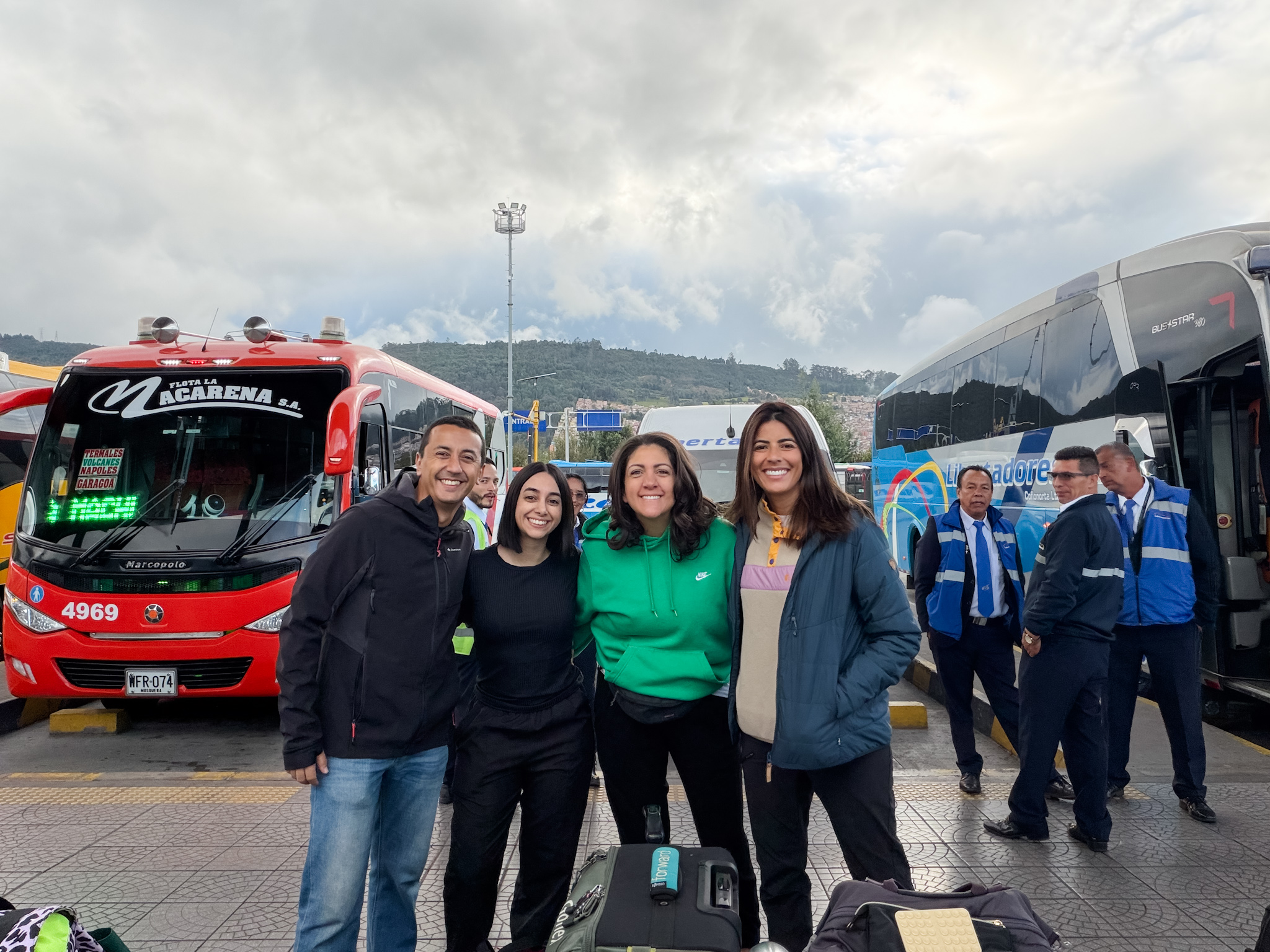
If you’re wondering how to get to El Cocuy, the short answer is bus or car. I started in Bogotá, which has direct buses. The route has a few decisions worth making ahead of time, though, and getting them right can save you a rough travel day before you’ve even started hiking.
Here’s what I learned after two trips to the pueblo: where to stay in Bogotá, which bus company to book, and which stops along the way are worth it.
Where to Stay in Bogotá Before You Go
My trips to El Cocuy started with at least a night in Bogotá, and where you sleep makes that first leg a lot smoother or a lot more stressful. Before you pick a hotel, find out the departure time and the terminal your bus actually leaves from.
Before the bus
- If you’ve got extra time to be a tourist: Stay near Centro Comercial Andino. You’re in the El Retiro/Zona T area of Chapinero with plenty of food nearby. Monserrate, La Candelaria and Museo del Oro are farther south, so plan a separate trip for sightseeing. Andino isn’t next to Terminal Norte either, and the drive across the city depends on traffic.
- If you’re short on time: Stay close to the terminal your bus leaves from, so you’re not up at the crack of dawn for a 6 or 7am departure. Don’t just assume that’s Terminal Norte. The park’s official access page lists Terminal Salitre for direct buses to El Cocuy and Güicán. Operators can have sales offices at more than one terminal, so an office listing doesn’t tell you where your bus boards. Check your ticket and leave time to get there.
On the way back
If you’re adding extra days to explore before flying home, anywhere along the route is fair game. If you need to get home fast, an Airbnb near the airport is worth considering. Bogotá traffic is no joke, no matter the hour, and you don’t want to be cutting it close to a flight.
My rule: no same-day flights
Don’t fly in or out the same day as your long bus ride. Road closures and traffic delays are unpredictable. It sometimes works out fine, but it’s not worth staring at the clock or fighting with an airline to change your flight when it doesn’t. The extra night is a buffer, not a guarantee against every delay.
Getting to El Cocuy by Bus
Two companies are worth checking: Libertadores/Coflonorte and Expreso Paz de Río, which runs Gacela. Think of them as leads, not a promise that a bus runs on your date.
Who to book with
- Libertadores: Its official website lists El Cocuy from Bogotá–Salitre and sends you to its ALAS platform to buy tickets. redBus lists the route too.
- Expreso Paz de Río / Gacela: It has online booking and listed ticket offices, so it’s not an in-person-only option. Confirm the service and boarding point for your date.
Skip the random phone numbers
Get contact details from the operator’s own website, and buy at its ticket office or through an authorized booking channel. Don’t assume a number from a search result or a WhatsApp contact is official. Supertransporte recommends official counters or authorized websites.
What to expect on the bus
- Wi-Fi and outlets: Don’t count on either. Download what you need and bring a charged power bank.
- Seats: Ask which service and seat type you’re booking. Reclining seats and other perks depend on the bus, and a fleet description doesn’t guarantee yours.
- Bathrooms: Skip the onboard bathroom if you can. Ask whether your bus has one and where the planned bathroom and food stops are, since that can vary.
- Supplies: Bring toilet paper or wipes, hand sanitizer, snacks and water. Sitting near the front is worth it if that’s more comfortable for you.
Plan for roughly ten hours on the Bogotá–El Cocuy bus as a starting estimate. Booking sites list about that, but road, weather and traffic delays can stretch it, so treat it as a full travel day. Pack snacks and entertainment, and keep your layers handy for the cold as you climb.
What About Driving Yourself?
Driving is an option if you’d rather have your own wheels once you arrive. You get more flexibility for stops, including a detour to Villa de Leyva. The mountain roads are full of switchbacks, though, so budget extra time either way.
The route
The park’s published driving route goes Bogotá → Tunja → Duitama → Santa Rosa de Viterbo → Cerinza → Belén → Susacón → Soatá. From Soatá it lists two ways in:
- Via Capitanejo: Capitanejo → El Espino → Panqueba → El Cocuy or Güicán.
- Via Boavita: Boavita → La Uvita → San Mateo → Guacamayas → Panqueba → El Cocuy or Güicán.
Check the roads first
Those get you to the towns. They don’t guarantee every road is open or right for your car on your dates, and some later stretches are unpaved. Check INVIAS road information and confirm the current approach with your accommodation or operator before you leave.
Town vs. trailhead
Getting to the pueblo isn’t the same as getting to a trailhead. Arrange the local transfer for your trail and check whether your own car can handle that access road. The trek guide covers trail reservations and hiking-day logistics.
Coming from elsewhere in Boyacá or Santander? Expreso Paz de Río lists El Cocuy routes from Paipa, Tunja and Duitama as well as Bogotá, so yes, Paipa can be a departure point. Confirm the date, boarding location and seat availability with the operator. From Santander, check your exact starting town and any connections. A town that looks closer on the map doesn’t tell you the travel time.
Driving the Bogotá–Tunja corridor? Puente de Boyacá is a possible stop south of Tunja. It marks the Battle of Boyacá on August 7, 1819, the decisive battle in the independence campaign, and it’s worth the time if history is your thing. How long you stay depends on parking, access and how much you want to see.
Where to Stop Along the Way
Stop in Villa de Leyva
If your schedule allows it, Villa de Leyva is worth building in. The colonial streets and that massive stone plaza make it a place you’ll want more time in, and it can break up the trip on the way there or back. It’s west of Tunja, off the direct El Cocuy route, so plan it as a real side trip, not a quick roadside stop.
Other Towns Worth a Stop (If You Have the Time)
Villa de Leyva isn’t the only option for a longer Boyacá trip! Some of these places are on or near the main route and others need a real detour and extra time. If you’re taking the bus, you’ll need separate tickets and onward transport for any longer stop.
- Tunja: Boyacá’s capital, with a historic colonial center. It’s on the main route, and Expreso Paz de Río lists onward service to El Cocuy. A through ticket doesn’t include a sightseeing stopover, though.
- Paipa: Known for thermal springs and Lake Sochagota. A good break on a road trip. If you’re on a bus, check onward service for your dates.
- Sogamoso: The Archaeological Museum and its reconstructed Sun Temple dig into Muisca history. It’s a side trip from the direct Duitama–Soatá route, and the temple is a reconstruction, not the original.
- Lago de Tota: Colombia’s largest natural lake, with the sandy shore at Playa Blanca. It’s a separate detour beyond the Sogamoso area, so check the approach and current conditions before you go.
- Monguí: Known for handmade soccer balls and its historic center. Another real side trip, and a good pick if you want a slower visit.
- Soatá: On the main route, and known for dates and date-based sweets. A decent place to pause before the last mountain-road stretch.
Short on time? Pick one stop that fits your actual route. Villa de Leyva is lovely, but it’s still a detour. Sogamoso, Lago de Tota and Monguí work better as part of a longer Boyacá trip than squeezed into an already long day to El Cocuy.
Before You Book
A few things to sort out before you lock in your dates:
Plan the whole trip together
- Coordinate everything: Confirm park trail availability, your guide, your lodging and your outbound and return transport before you commit to nonrefundable dates. A room or a bus seat doesn’t reserve you a spot on the trail.
- Confirm the actual bus: Check the departure date, boarding terminal, arrival point, fare, baggage allowance and cancellation terms with the operator or an authorized seller. Schedules and availability change, so reconfirm close to travel.
- Check road and trail access: Recent notices and local advice beat any timeless route description. The park’s July 17, 2026 reopening notice described access-road and bridge restrictions that were still in place at that point. It can’t tell you what’s open on your dates.
Altitude
- The numbers: Bogotá is around 2,600 m above sea level, and El Cocuy town is about 2,750 m (9,020 ft). The hikes go much higher.
- My advice: Plan to arrive at least a day before any major hiking. That’s a minimum, not a guarantee. One night in Bogotá or one day in town doesn’t mean you’re ready, so build in extra time if you can.
- What the guidance says: CDC guidance favors going up gradually and giving your body time to adjust. Being fit doesn’t remove your risk of altitude illness. If you have health questions, get advice from a doctor who knows your situation.
Park requirements
- Before you hike: Registration and induction are required, along with an authorized guide and accident-and-rescue insurance. The park’s annex requires registration and induction at least the day before you enter, so factor that into your arrival time.
- More detail: The trek guide and packing list cover the rest.
Getting to El Cocuy takes some planning, but it’s a straightforward trip once you know the route. Next up: where to stay once you arrive, starting with the woman who made both of my trips feel effortless.
More El Cocuy Guides
- Where to Stay in El Cocuy: Hostal El Caminante: Why this hostal, run by Marta, made both of my trips easy.
- The History of El Cocuy: Pueblo, U’Wa Culture, and the Páramo: the story behind the name, the U’Wa’s connection to the mountain, and what makes the páramo so rare.
- El Cocuy Packing List: What to Bring for the Trek: Everything that made it into my bags for two big hikes and one acclimatization day.
- The El Cocuy Trek: Laguna Grande de la Sierra and Púlpito del Diablo: What the actual hikes are like, what they cost, and what to know if you’re bringing kids.

Leave a Reply